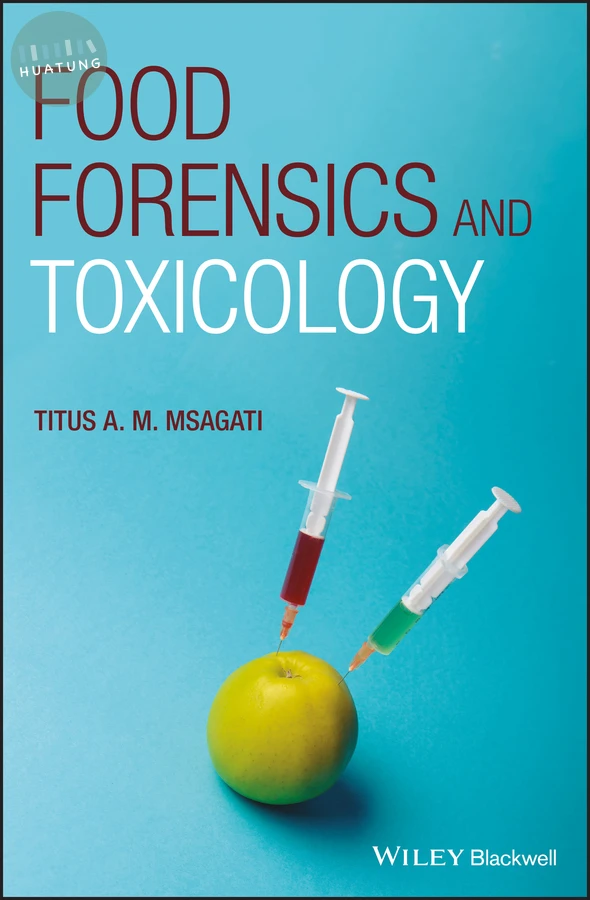
Food Forensics and Toxicology
$6393元 定價: $7103 9折 可訂購
簡介
A comprehensive guide, offering a toxicological approach to food forensics, that reviews the legal, economic, and biological issues of food fraud
Food Forensics and Toxicology offers an introduction and examination of forensics as applied to food and foodstuffs. The author puts the focus on food adulteration and food fraud investigation. The text combines the legal/economic issues of food fraud with the biological and health impacts of consuming adulterated food. Comprehensive in scope, the book covers a wide-range of topics including food adulteration/fraud, food "fingerprinting" and traceability, food toxicants in the body, and the accidental or deliberate introduction of toxicants into food products.
In addition, the author includes information on the myriad types of toxicants from a range of food sources and explores the measures used to identify and quantify their toxicity. This book is designed to be a valuable reference source for laboratories, food companies, regulatory bodies, and researchers who are dealing with food adulteration, food fraud, foodborne illness, micro-organisms, and related topics. Food Forensics and Toxicology is the must-have guide that:
Takes a comprehensive toxicological approach to food forensics
Combines the legal/economic issue of food fraud with the biological/health impacts of consuming adulterated food in one volume
Discusses a wide range of toxicants (from foods based on plants, animals, aquatic and other sources)
Provides an analytical approach that details a number of approaches and the optimum means of measuring toxicity in foodstuffs
Food Forensics and Toxicology gives professionals in the field a comprehensive resource that joins information on the legal/economic issues of food fraud with the biological and health implications of adulterated food.
目錄
Chapter 1: Food Forensics: Introduction
Chapter 2: Food Provenance and Food Fingerprinting: Authentication and Traceability of Foods and Food Products
Chapter 3: Food Forensics Cases Related to Food Allergenomic Sabotage and Food Intolerance: Allergens and Allergenicity of Processed Foods
Chapter 4: Food Forensics Cases Related to Food Bioterrorism/Food Bio-Weapons and Food Poisoning Agents: Agrochemical Food Poisoning Agents
Chapter 5: Food Forensics Cases Related to Food Bioterrorism/Food Bio-Weapons and Food Poisoning Agents: Biological Food Poisoning Agents
Chapter 6: Food Forensics Cases Related to Bioterrorism Poisoning using Pathogenic Viruses
Chapter 7: Food Forensics Cases Related to Genetically Modified Organisms (GMO) Foods
Chapter 8: Food Forensics Cases Related to Poisoning of Food and Water using Radionuclides
Chapter 9: Food Forensics Cases Related to Nano and Novel/Intelligent Foods, Feeds, and Agroproducts
Chapter 10: Food Forensics Cases Related to Application of Food Additives and Food Improvement Agents
Chapter 11: Application of Molecular Biology Techniques in Food Forensics
Chapter 12: Application of Atomic and Molecular Spectroscopic Techniques in Food Forensics
Chapter 13: Application of Microscopy Techniques in Food Forensics
Chapter 14: Application of Ionising Radiation (X-rays/γ-rays) Techniques in Food Forensics
Chapter 15: Application of Chromatographic Techniques in Food Forensics
Chapter 16: Application of Hyphenated Techniques in Food Forensics
Chapter 17: Application of Electromigration-Driven Techniques in Food Forensics
Chapter 18: Application of Thermal Methods in Food Forensics
Chapter 19: Application of Electrochemical Methods and Biosensors
Chapter 20: Application of Flow Cytometry in Food Forensics
Chapter 21: Application of Multivariate Statistical Analysis/Chemometrics in Food Forensics
Chapter 22: Conclusions and Future Trends
Index