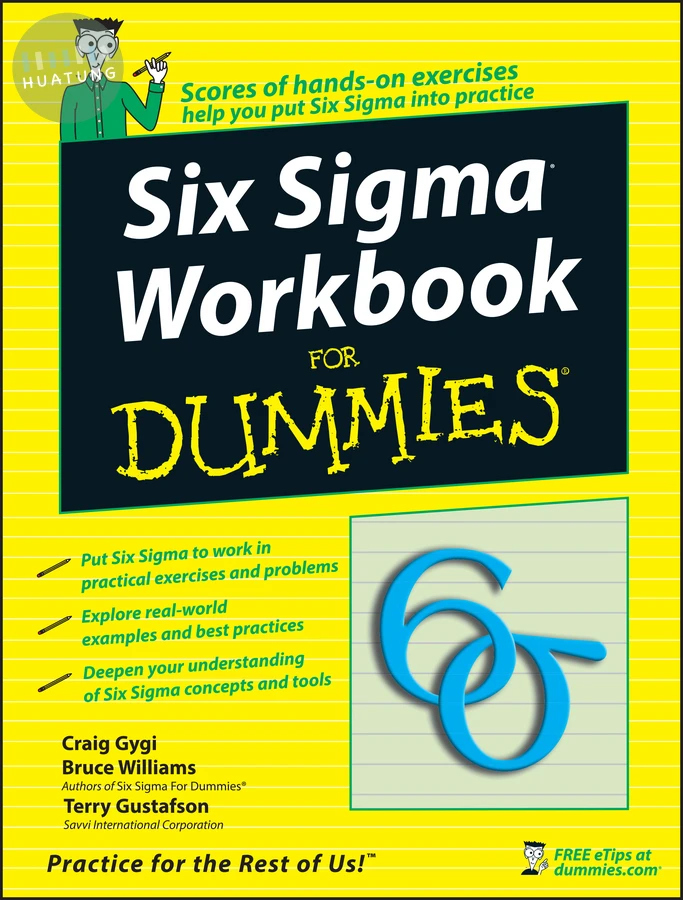
Six Sigma Workbook For Dummies
$582元 定價: $647 9折 可訂購
簡介
Improve your efficiency -- and bring in big profits!
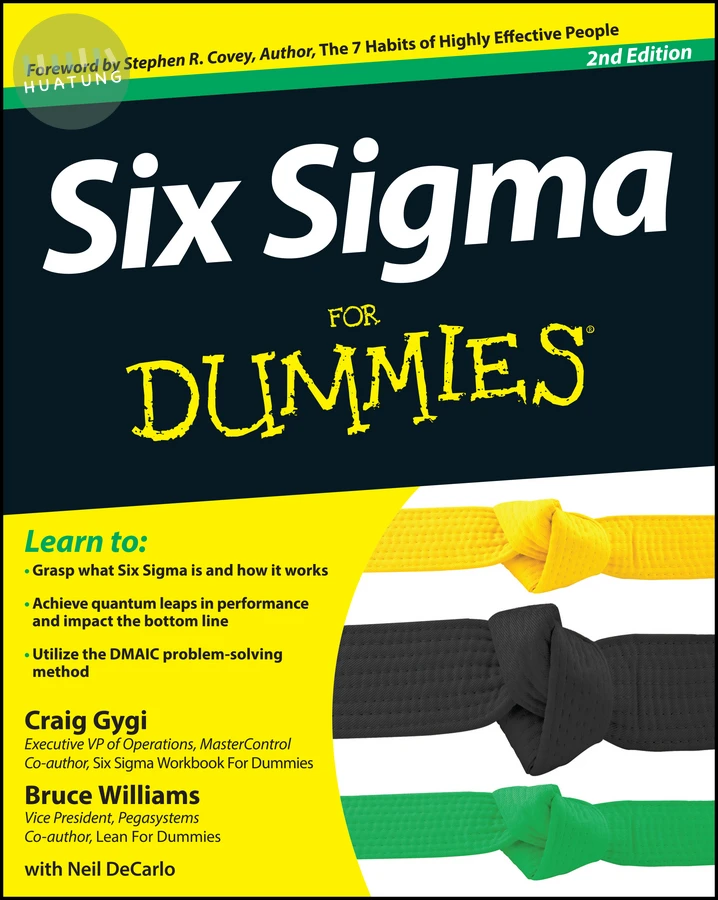
Need help implementing or understanding Six Sigma? Want to take this powerful problem-solving methodology and apply it to your business? Six Sigma isn't just for Fortune 500 companies anymore; it's for every business, even yours, no matter how big or small. This hands-on workbook provides the knowledge, insight, and practical exercises you need to master Six Sigma and put it to work in your business. Perfect as a companion workbook for Six Sigma For Dummies -- or any other Six Sigma book -- Six Sigma Workbook For Dummies gives you a wealth of examples, problems, and other tools you need to turn Six Sigma theory into practice -- today!
Discover
* How to form and lead a Six Sigma initiative
* Project alignment with business objectives and strategy
* How to create process flow maps and models
* Chart and graph plotting for analysis and interpretation
* Methods for calculating Sigma scores
* How to quantify variable relationships
目錄
Introduction. Part I: Getting Started in Six Sigma.
Chapter 1: Getting Ready for Six Sigma: The Effects of Variation.
Chapter 2: Forming a Six Sigma Initiative.
Chapter 3: Leading and Managing a Six Sigma Initiative.
Part II: Defining a Six Sigma Project.
Chapter 4: Putting the Right Foot Forward: Defining a Six Sigma Project.
Chapter 5: Brainstorming the Inputs to Your Process.
Chapter 6: Prioritizing Which Inputs to Address.
Part III: Mastering Measuring.
Chapter 7: Categorizing Data and Calculating Measures of Variation.
Chapter 8: A Picture’s Worth 1,000 Words: Measuring with Charts and Graphs.
Chapter 9: Yield and Defects: Calculating the Good, the Bad, and the Ugly.
Part IV: Assessing the Right Approach to Your Analysis.
Chapter 10: Mastering Measurement System Analysis (MSA).
Chapter 11: Capability: Matching Performance to Need.
Chapter 12: Narrowing Your Inputs with Confidence.
Part V: Improving and Controlling.
Chapter 13: Quantifying Variable Relationships.
Chapter 14: Planning and Conducting 2k Factorial Experiments.
Chapter 15: Constructing Control Plans and Charts.
Part VI: The Part of Tens.
Chapter 16: Ten Implementation Myths of Six Sigma.
Chapter 17: Ten Tips for Finishing a Six Sigma Project Successfully.
Index.