簡介
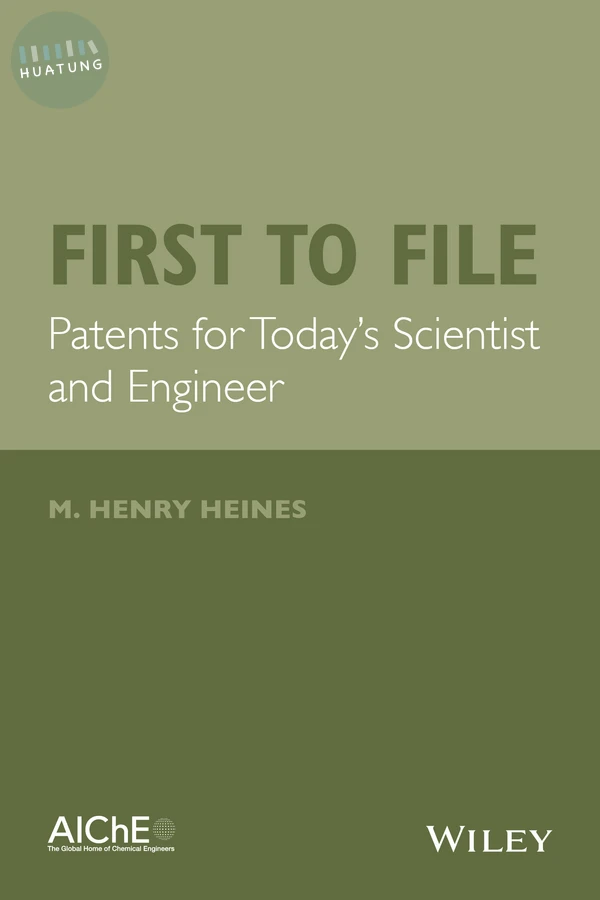
Bridges the gap between the realistic needs and questions of scientists and engineers and the legal skills of professionals in the patent field at a level accessible to those with no legal training
• Written for inventors in lay terms that they can relate to or easily follow
• Lays out the new features of patent law introduced by the America Invents Act of 2012
• Explains the differences between the first-to-invent and first-to-file rules and why the two rules will coexist
• Focuses on the growth of new technologies in industry versus the laws protecting them
目錄
List of Figures ix
List of Tables xi
Preface xiii
Introduction xvii
About the Author xix
1. The First-to-File Rule: Evolution and Application 1
1.1 History of the First-to-File Rule in the United States 2
1.2 “Who’s on First?”: The Rule and Its Application 5
1.3 Adapting Business Routines to the First-to-File Rule 7
2. Prior Art before and after the AIA: Two Standards Compared 9
2.1 Prior Art and the First-to-File Rule 9
2.2 “But is It Art?”: The Art of Prior Art 10
2.3 And is It “Prior”?: Pre-AIA Law vs. the AIA 11
2.3.1 U.S. Patents and Published U.S. Patent Applications 11
2.3.2 Patents and Patent Applications Other than those of the United States 14
2.3.3 Other Published Literature 16
2.3.4 Commercial Activities 17
2.3.5 Otherwise Available to the Public 21
2.4 A Servant of Two Masters?: The “Effective Filing Date” and Its Role in Determining the Governing Rule 21
2.5 Conclusion 23
3. Creating One’s Own Prior Art: Self-Imposed Barriers to Patentability 25
3.1 The On-Sale Bar 26
3.1.1 Ready for Patenting? 26
3.1.2 Exceptions for Experimental Use 33
3.2 The Publication Bar: Publish and Perish? 35
3.2.1 Posting on an Internet Server 36
3.2.2 Slide Presentations and Posters at a Conference 37
3.2.3 Submission of a Thesis to a University Library 38
3.2.4 Grant Proposals 39
3.3 Observations 41
4. Canceling Prior Art and Other Benefits of Record Keeping 42
4.1 Derivation Proceedings 42
4.2 Disqualifying Reference Materials as Prior Art 45
4.3 Records Showing Collaboration 46
4.4 Records of Public Disclosures and Commercial Uses 48
4.5 Laboratory Notebooks 50
5. Inventing in an Employment Environment: The AIA’s New Recognition of Employer Interests and Project Management 52
5.1 Project Management and the New Definition of Prior Art 53
5.2 Allowing the Employer to Stand in for the Inventor 54
5.3 What Constitutes an Obligation to Assign? 56
5.4 Implying an Obligation to Assign When There is No Express Agreement 60
5.5 Having a “Sufficient Proprietary Interest” Other than by Assignment or Obligation to Assign 63
5.6 When No Assignment, Obligation to Assign, or Proprietary Interest: The “Shop Right” 63
6. The Novelty Threshold: Can You Recognize It When You See It? 67
6.1 Anticipation and the “All Elements in a Single Reference” Rule 68
6.1.1 “Incorporation by Reference” of the Missing Element from Another Source 70
6.1.2 Inherent Disclosure of the Missing Element 72
6.2 Novelty in the Arrangement of Parts 73
6.3 Another Argument Against Anticipation: The “Nonenabling Reference” 77
6.4 Caution: A Reference Can Anticipate an Invention Even if It “Teaches Away” from the Invention 79
6.5 Novelty versus Anticipation among Genus, Subgenus, and Species 84
6.5.1 Species Anticipating a Genus 84
6.5.2 Specific Value Anticipating a Range 85
6.5.3 “Shotgun” Disclosures in the Prior Art 85
6.5.4 Species or Subgenus Novel over a Larger, Encompassing Genus 86
6.5.5 Narrow Range Novel over a Broad Range Encompassing the Narrow Range 86
6.6 Are We Done? 87
7. Confronting the Prior Art: What Makes an Invention Nonobvious? 88
7.1 “But Every Invention is a Combination of Old Elements!” 90
7.1.1 Synergism and Changes in Function 90
7.1.2 “But Why Would a Munitions Manufacturer Go to a Horse Trainer (for the Missing Element)?” 92
7.1.3 “But Nobody Knew What the Problem Was (Before I Came Along)!” 94
7.1.4 “But They Said It Couldn’t Be Done!” 95
7.2 Pursuing the Unpredictable 99
7.2.1 Predictable Now but Unpredictable Then? 101
7.2.2 Finding a Needle in a Haystack 103
7.2.3 Unpredictability versus Optimization 105
7.3 In Hindsight (and Other Obvious or Nonobvious Thoughts) 107
8. The View from the Infringer’s Side: Challenging a Patent’s Validity 108
8.1 Do You Really Want to Go to Court? 109
8.2 Selecting Claims 111
8.3 Options for Challenge before the Patent is Granted 115
8.4 Options for Challenge after the Patent is Granted 118
8.4.1 Citation of Prior Art and Written Statements 118
8.4.2 Post-Grant Review and Inter Partes Review 119
9. Patent Eligibility: Pushing the Envelope on Subject Matter Appropriate for Patenting 122
9.1 Medical Diagnostic Methods 123
9.2 Computer-Implemented Processes 127
9.3 Business Methods 130
9.4 The AIA’s New Procedure for Challenging Business Method Patents 133
9.5 Conclusion: A Rule for Patent Eligibility? or a Case of “I’ll Know It When I See It”? 135
10. Selected Topics in Patent Strategy 139
10.1 Provisional Patent Applications 139
10.2 Strategies in Claim Construction 145
11. Patents and Beyond: The Variety and Scope of Intellectual Property 157
11.1 Trade Secrets 157
11.1.1 Scope 159
11.1.2 The Right of an Individual to Use Fundamental Skills 159
11.1.3 Comparing Trade Secrets to Patents 160
11.2 Trademarks 163
11.2.1 Choosing a Trademark 163
11.2.2 Securement, Maintenance, and Infringement of Trademark Rights 164
11.3 Copyrights 164
11.4 Design Patents 166
11.5 IP Coverage for Plants 167
11.6 Conclusion 167
Appendix A Selected Fees Charged by U.S. Patent and Trademark Office and Other U.S. Agencies for Intellectual Property as of January 1, 2014 170
Appendix B Patent Searchers 175
Acronym Glossary 178
Glossary 179
Bibliography, Websites, and Blogs 185
Patents and Published Patent Applications Cited 188
Cases Cited 191
Index 194