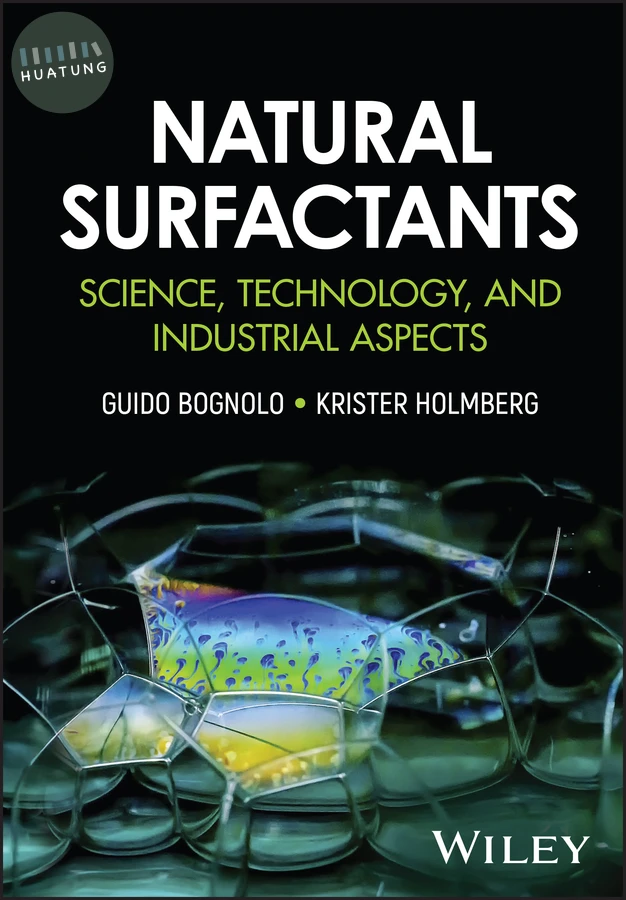

Natural Surfactants
$5445元 定價: $6050 9折 可訂購
簡介
Comprehensive guide to the fundamentals and growing range of commercial applications of natural surfactants Natural Surfactants: Science, Technology, and Industrial Aspects discusses the origin, production, physico-chemical properties, major producers, status, and opportunities of natural surfactants from macro- and microorganisms. The book presents the latest research in the field of natural surfactants, reviewing their advantages, current and future applications based on structure-performance relationships, and commercial uses in diverse industries including vaccines, food emulsifiers, feed additives, personal care formulations, pharmaceuticals, crop protection formulations, soil remediation and microbial enhanced oil recovery. The book contains introductory sections on each of the major classes of natural surfactants with each section broken down into subchapters discussing their biochemical and commercial features. It has a chapter on the analytical techniques used for the characterisation of natural surfactants and their producing microorganisms. It closes with a chapter on future perspectives, discussing hurdles and opportunities for natural surfactants. Authored by experts in the field of surfactant science with experience in both academic research and industrial practices, Natural Surfactants includes information on: The chemical structure and the physicochemical properties
The biological activity
The production process, including, as appropriate, extraction or fermentation strategies and conditions, microorganism strains, medium composition, and purification techniques
The economics of production for the major classes
A comprehensive review of the existing industrial uses and of the potential new applications as it can be inferred from the match of physicochemical properties and market demands.
Natural Surfactants contains essential knowledge on the subject for academic researchers and industry practitioners working in the field of surfactant science. The text is also valuable for universities, research institutes, and regional and multinational companies active in surfactants production and/or in their formulation.
目錄
Preface xi
Acronyms xv
1 General Views on Natural Surfactants 1
1.1 Introduction 1
1.2 Surfactants from Nature 2
1.3 Natural Surfactants Versus Bio-Based Surfactants 4
1.4 Advantages and Disadvantages of Naturally Occurring Surfactants 8
1.5 Production Process of Natural Surfactants 9
1.5.1 Selection of the Microorganism 11
1.5.2 Medium Composition 11
1.5.3 Feeding Strategies 13
1.5.3.1 Pulse Feed 13
1.5.3.2 Constant Feed Rate 13
1.5.3.3 Exponential Feed Rate 13
1.5.3.4 Feedback Control Feed Rate 14
1.5.4 Biosurfactants Transport 15
1.5.5 Recovery and Purification 15
1.6 Raw Materials in Natural Surfactants Production 16
1.7 Life Cycle Analysis of Natural Surfactants 17
1.8 Production Costs of Naturally Occurring Surfactants 18
1.9 Natural Surfactants are Chiral 19
1.10 A Glimpse into the Future 20
References 24
2 Saponins 29
2.1 Introduction 29
2.2 Chemical Structures and Properties 31
2.3 Biological Activity 36
2.3.1 Antibacterial Activity 36
2.3.2 Antiviral Activity 36
2.3.3 Antifungal Activity 36
2.3.4 Antiparasitic Activity 36
2.3.5 Antiinflammatory Activity 36
2.3.6 Antitumor Activity 37
2.3.7 Hepatoprotective Activity 37
2.3.8 Immunoadjuvant Activity 37
2.4 Sources of Commercial Saponins 38
2.5 Extraction and Purification 41
2.6 Toxicology 44
2.6.1 Acute Toxicity 44
2.6.2 Long-Term Toxicity in Mice 44
2.6.3 Short-Term Toxicity in Rats 46
2.6.4 Long-Term Toxicity in Rats 46
2.7 Producers and Vendors 46
2.8 Products and Prices 49
2.9 Existing Applications 49
2.10 Potential Applications 52
2.11 Regulatory 55
2.11.1 Saponins in Pharmacopoeias 55
2.11.2 Saponins in Food and Cosmetics Regulatory 55
References 56
3 Phospholipids 63
3.1 Introduction 63
3.2 Chemical Structure and Properties of Lecithin 66
3.3 Production 68
3.4 Producers and Prices 70
3.5 Existing Applications 73
3.5.1 Liposomes for Delivery of Bioactive Substances 73
3.5.2 Lecithin in Food, Feed, and Nutrition 75
3.5.3 Lecithin in Personal Care Formulations 76
3.5.4 Lecithin in Other Industrial Areas 76
3.6 Regulatory 77
References 78
4 Bile Acids 81
4.1 Introduction 81
4.2 Chemical Structures and Properties 81
4.3 Producers 82
4.4 Applications 82
References 83
5 Rhamnolipids 85
5.1 Introduction 85
5.2 Chemical Structures and Properties 85
5.3 Biosynthesis 90
5.4 Biotechnological Production 91
5.4.1 Choosing the Bacteria 91
5.4.2 Fermentation Conditions 92
5.4.2.1 Medium Composition 93
5.4.2.2 Fermentation Parameters 94
5.4.2.3 Extraction and Purification 94
5.4.3 Reducing Raw Material Costs 95
5.4.3.1 Waste Cooking Oils (WCO) 95
5.4.3.2 Other Sources 96
5.4.4 Overcoming Pathogenicity 97
5.5 Rhamnolipids Through Organic Synthesis 98
5.6 Rhamnolipids Through Bioorganic Synthesis 100
5.7 Biodegradability, Toxicity, and Antimicrobial Effect 101
5.8 Suppliers, Formulators, Products, and Prices 102
5.9 Existing Applications 104
5.10 Potential Applications 105
5.11 Regulatory 107
References 107
6 Sophorolipids 117
6.1 Introduction 117
6.2 Chemical Structures and Properties 117
6.3 Biosynthesis 123
6.4 Production 125
6.5 Production Costs 128
6.6 Biodegradability and Toxicity 129
6.7 Suppliers, Formulators, Products, and Prices 129
6.8 Existing Applications 134
6.8.1 Cosmetics 134
6.8.2 Household Cleaning 134
6.8.3 Source of Chemicals 135
6.9 Potential Applications 135
6.10 Regulatory 136
References 137
7 Mannosylerythritol Lipids 141
7.1 Introduction 141
7.2 Chemical Structures and Properties 141
7.3 Production 145
7.4 Producers 148
7.5 Existing and Potential Applications 148
7.5.1 Cosmetics 148
7.5.2 Disinfection 149
7.5.3 Crop Protection 150
References 151
8 Trehalose Lipids 153
8.1 Introduction 153
8.2 Chemical Structures and Properties 153
8.3 Production 158
8.4 Skin Toxicity 159
8.5 Existing Applications 159
8.6 Potential Applications 160
References 161
9 Cellobiose Lipids 163
9.1 Introduction 163
9.2 Chemical Structures and Properties 163
9.3 Production 165
9.4 Potential Applications 165
References 166
10 Xylolipids 167
10.1 Introduction 167
10.2 Chemical Structures and Properties 167
10.3 Producers 168
10.4 Potential Applications 169
References 169
11 Lipopeptides 171
11.1 Introduction 171
11.2 Chemical Structures and Properties 172
11.3 Biosynthesis 173
11.4 Production 174
11.5 Production Costs 174
11.6 Toxicology, Environmental Properties 175
11.7 Suppliers and Products 176
11.8 Existing and Potential Applications 177
11.9 Regulatory 177
References 177
12 Antimicrobial Peptides 181
12.1 Introduction 181
12.2 Chemical Structures and Properties 182
12.3 Sources 184
12.4 Production 185
12.5 Mechanism of Action 187
12.5.1 Extracellular Via Membrane Targeting Mode 187
12.5.2 Intracellular Mode 190
12.5.2.1 Inhibition of Protein Biosynthesis 190
12.5.2.2 Inhibition of Nucleic Acid Biosynthesis 190
12.5.2.3 Inhibition of Protease Activity 190
12.5.2.4 Inhibition of Cell Division 190
12.6 Existing and Potential Applications 191
12.6.1 Medicine 191
12.6.1.1 Wound Healing and Skin Infections 191
12.6.1.2 Dental Care 192
12.6.1.3 Ophthalmology 192
12.6.1.4 Antibacterial Peptides 192
12.6.1.5 Antifungal Peptides 192
12.6.1.6 Anticancer Peptides 192
12.6.1.7 Antiviral Peptides 192
12.6.1.8 Antiparasitic Peptides 193
12.6.1.9 Anti-HIV Peptides 193
12.6.1.10 Endogenous Antimicrobial Peptides 193
12.6.1.11 Biofilm Inhibitors 193
12.6.2 Medical Devices 193
12.6.3 Pharmaceutical Industry 194
12.6.3.1 Therapeutic Antimicrobial Peptides on the Market 194
12.6.3.2 Nanoparticle Formulations of Antimicrobial Peptides 195
12.6.4 Food 196
12.6.5 Animal Husbandry and Aquaculture 196
12.6.6 Agriculture 196
12.7 Producers 196
References 198
13 Lipopolysaccharides 207
13.1 Introduction 207
13.2 Chemical Structures and Properties 209
13.3 The Emulsan Story 211
13.4 Other Lipopolysaccharides 214
References 215
14 Characterization of Natural Surfactants 219
14.1 Introduction 219
14.2 Methods for the Characterization of Naturally Occurring Surfactants 221
14.3 Methods to Determine the Self-Assembly Behavior of Naturally Occurring Surfactants 230
14.4 Methods to Determine Phase Diagrams of Naturally Occurring Surfactants 231
14.5 Methods for Strain Identification 233
14.6 Methods to Identify the Biosynthesis Pathway of Surface-Active Compounds 234
References 235
15 Distinctive Features of Low- and High-Molecular-Weight Amphiphiles 241
15.1 Introduction 241
15.2 Emulsions 242
15.3 Natural Amphiphiles as Emulsifiers and Emulsion Stabilizers 245
15.3.1 Phospholipids 246
15.3.2 Saponins 247
15.3.3 Glycolipids 248
15.3.4 Lipopeptides 248
15.3.5 Surface-Active Proteins 248
15.3.6 Lipopolysaccharides 250
References 251
16 Commercial Exploitation of Natural Surface-Active Agents 255
Foreword 255
16.1 Introduction 255
16.2 Home Care 256
16.2.1 Household Laundry Detergents 256
16.2.2 Hand Dishwashing Cleaners 258
16.2.3 Hard Surface Cleaners 258
16.3 Cosmetics 258
16.4 Plant Protection 260
16.5 Food 262
16.6 Oil Industry 264
16.6.1 General 264
16.6.2 Microbial Enhanced Oil Recovery 264
References 269
Index 273