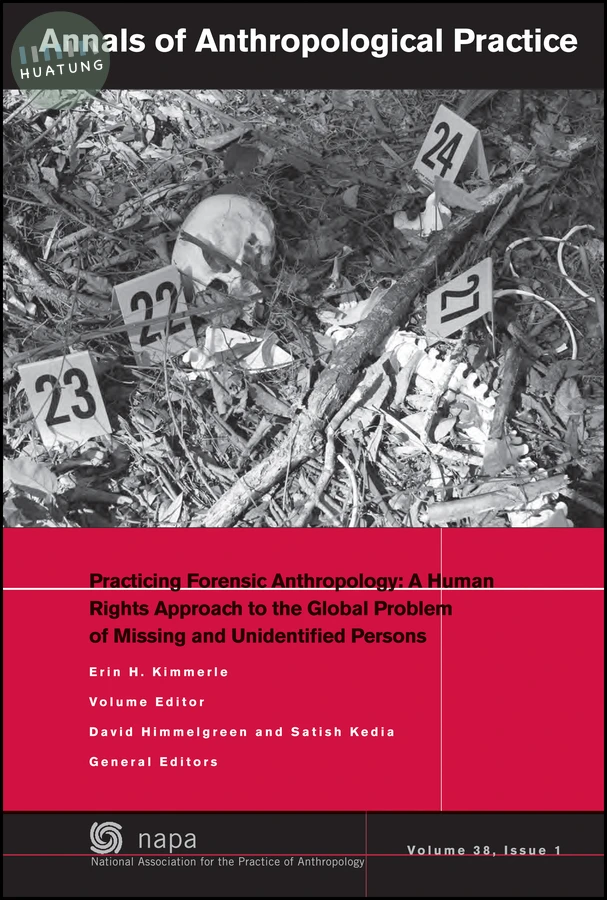

Practicing Forensic Anthropology
$834元 定價: $927 9折 可訂購
簡介
The problem of missing, endangered, and unidentified persons is increasingly approached through a human rights model with successful outcomes. Contexts vary from international investigations into war crimes, genocide, and extrajudicial killings to American “cold cases.” In all these examples, anthropologists play critical roles such as searching for clandestine graves, crime scene recovery, human identification, interviewing witnesses, repatriation, public education, and testifying in court. To successfully identify unknown persons, key questions about human variation and biology are essential. For example, can ancestry be reliably estimated? What are the ramifications of estimating the biological profile of an unknown person without appropriate references samples? Does the variation occur because of inherent genetic variation or environmental conditions? Given the potential variation that exists, what are the implications of using standard calibrations across populations in criminal trials? Moreover, forensic anthropologists today work in diverse cultural and legal environments. How do the roles of forensic anthropologists differ in diverse legal settings? The current practice of forensic anthropology ranges from field to lab to courtroom and has evolved as a discipline from what it was almost a century ago. The purpose of this volume is to explore the ways in which forensic anthropology intersects with current human right and humanitarian justice initiatives. The 11 papers in this series include a range of emerging new tools and approaches to human identification and the investigation of long-term missing and unidentified persons.
目錄
Practicing Forensic Anthropology: A Human Rights Approach to the Global Problem of Missing and Unidentified Persons
Erin H. Kimmerle 1
Forensic Anthropology in Long-Term Investigations: 100 Cold Years
Erin H. Kimmerle 7
Where Are They? Missing, Forensics, and Memory
Jose Pablo Baraybar and Rebecca Blackwell 22
Ignorance Is Not Bliss: Evidence of Human Rights Violations from Civil War Spain
Derek Congram, Ambika Flavel, and Kim Maeyama 43
Human Rights Investigations in Spain
Roxana Ferllini 65
Intersite Analysis of Victims of Extra- and Judicial Execution in Civil War Spain: Location and Direction of Perimortem Gunshot Trauma
Derek Congram, Nicholas Passalacqua, and Luis Rýos 81
Trauma Patterns in Cases of Extrajudicial Executions
Erin H. Kimmerle and John Obafunwa 89
Toward Estimating Geographic Origin of Migrant Remains along the United States–Mexico Border
M. Katherine Spradley 101
Craniometric Variation of Diverse Populations in Florida: Identification Challenges Within a Border State
Meredith L. Tise, Erin H. Kimmerle, and M. Katherine Spradley 111
Application of Stable Isotope Forensics for Predicting Region of Origin of Human Remains from Past Wars and Conflicts
Eric J. Bartelink, Gregory E. Berg, Melanie M. Beasley, and Lesley A. Chesson 124
Georeferencing a Cold Case Victim with Lead, Strontium, Carbon, and Oxygen Isotopes
George D. Kamenov, Erin H. Kimmerle, Jason H. Curtis, and Darren Norris 137
Contributions of Radiocarbon Analysis in Human Rights Investigations
Douglas H. Ubelaker 155
Biosketches 165