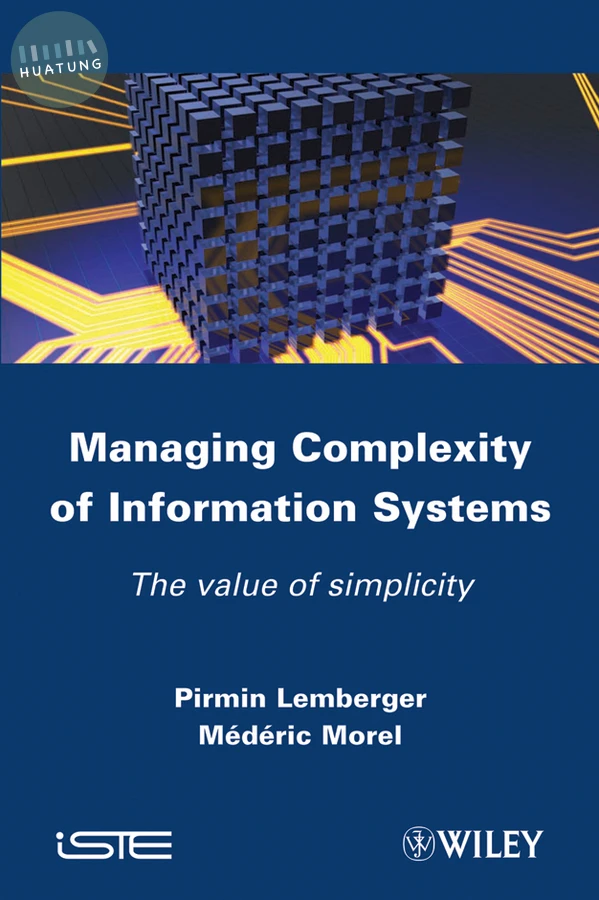
Managing Complexity of Information Systems
$5182元 定價: $5758 9折 可訂購
簡介
This book is about complexity in Information Systems (IS). The subject is addressed from both conceptual and applied perspectives. Concepts are drawn from information theory, industrial design and software engineering. Its content capitalizes on experiences gathered by the authors during various contracting jobs involving software architecture, modeling and IS architecture that were conducted for large organizations in the banking and industry sectors, as well as in the public sector.
The authors develop the point of view according to which mastering complexity involves two essential steps: first, one should develop a clear understanding of the real nature of complexity within the IS; second, one should identify the primary causes which contribute to its uncontrolled growth and organize these into a logical framework, in order to define efficient countermeasures. Both technical and psychological causes of complexity are to be considered. Two themes make up the main thread of the book: complexity and value. Both themes are quite common when considered separately, but their interplay remains a largely unexplored topic. The analysis of this interplay is one of the sources of originality of this book.
目錄
Foreword xi
Pascal GROJEAN
Preface xv
Chapter 1. Why Simplicity? 1
1.1. Solving conflicting requirements 1
1.2. Three periods in IS management 5
1.3. And now … simplicity! 10
1.4. Plan of the book 13
Chapter 2. Complexity, Simplicity, and Abstraction 17
2.1. What does information theory tell us? 17
2.2. What does the design tell us? 33
Chapter 3. Value or Values? 77
3.1. Who is concerned? 79
3.2. Concepts of value for an IS 80
3.3. Are these values sufficient and independent? 90
Chapter 4. Promoting Value Through Simplicity 97
4.1. Growing technical heterogeneity 100
4.2. Changing requirements 121
4.3. Human factors 131
Chapter 5. Simplicity Best Practices 149
5.1. Putting simplicity principles into practice 149
5.2. Defining a generic IS 149
5.3. A simplicity framework 152
Conclusion 173
APPENDICES 177
Appendix 1. Digging into Information Theory 179
Appendix 2. Two Measures of Code Complexity 195
Appendix 3. Why Has SOA Failed So Often? 207
Bibliography 219
Index 221