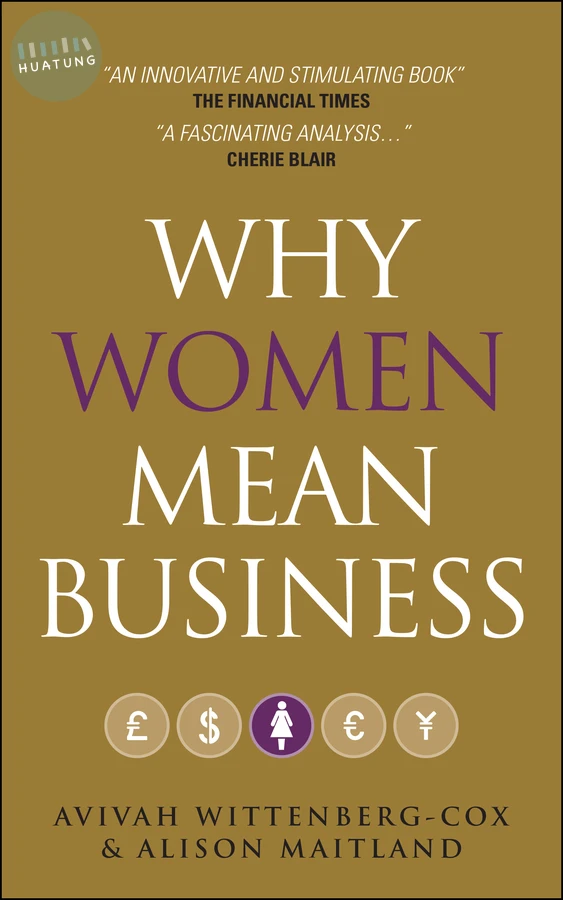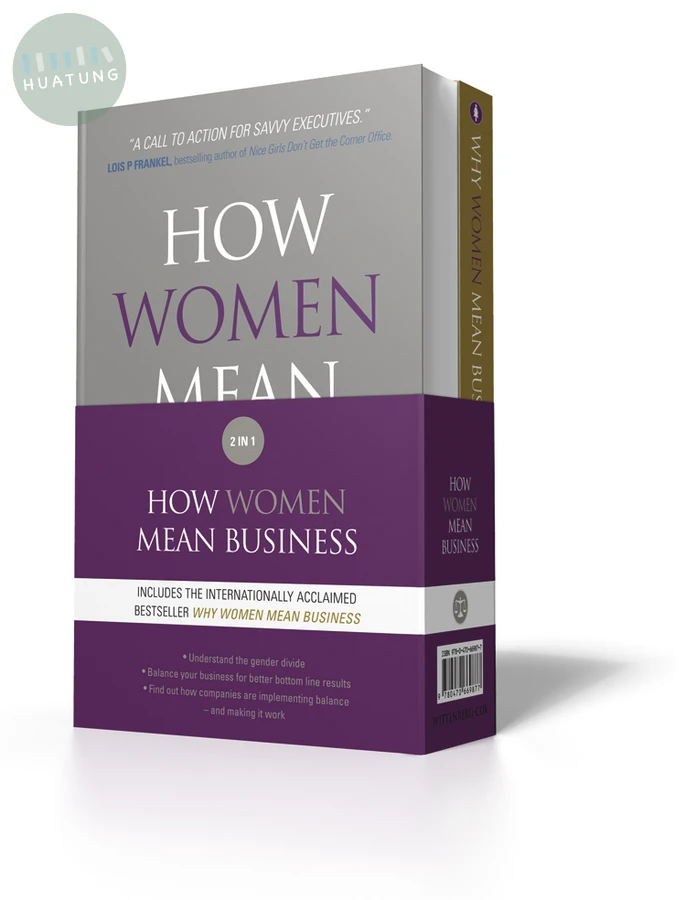

Why Women Mean Business
$1107元 定價: $1230 9折 可訂購
簡介
WOMEN MEAN BUSINESS “...gives example after example of the price that we all pay for a situation in which ‘women may hold the keys but men still control the locks’.”
The Times “What’s especially valuable is the authors’ analysis of where companies go wrong in managing women...that’s how it will help women in the workplace.”
Harvard Business Review “Lays out the importance of retaining women in senior leadership positions.”
Harpers Bazaar“Wittenberg-Cox and Maitland have opened new ground.”
Management Today WOMEN MEAN BUSINESSThey make up much of the market and most of the talent pool. Reaching women consumers and developing female talent is essential for sustainable economic growth in the 21st century. Studies show that better gender balance in business means better bottom line results and greater resistance to economic crises. So why are there still so few women in leadership roles in business? Why are companies struggling to respond to today’s female consumer? Why is there a persistent pay gap between men and women around the world? Why Women Mean Business takes the economic arguments for change to the heart of the corporate world. Fully updated in paperback, the book shows why getting gender right matters – as much when the economy’s bust as when it’s booming. A must-read, packed with ideas from companies that have made it work, views from top business leaders and step-by-step guides to how we can all become gender bilingual.
目錄
Foreword by Niall FitzGerald KBE xiii
Preface by Michael Kimmel xv
Acknowledgements xxi
CHAPTER ONE: WOMENOMICS 1
Guarantors of growth 1
The strategic side of the gender divide 6
Opportunity cost 9
Valuing difference 12
Becoming “gender-bilingual” 15
Declining demographics is not destiny 18
21st century forces: weather, women, web 22
CHAPTER TWO: MOST OF THE TALENT 27
The “talent wars” are here 28
Female brainpower 30
Under-used talent 34
The role of business schools 36
Tapping into the pool 39
Recruiting: making women welcome 40
Retaining: structural repairs needed 44
Promoting: return on investment 57
Building better boards 62
Legislating solutions – the controversial quota 65
CHAPTER THREE: MUCH OF THE MARKET 73
Purchasing power – beyond parity 75
Female finances 77
Sex and segmentation 85
The many faces of marketing to women 89
Shut-your-eyes 90
Marginalise 93
Specialise 94
Prioritise 96
CHAPTER FOUR: BECOMING “BILINGUAL”, WHAT COMPANIES CAN DO 103
A fresh look at traditional approaches to gender 103
Equal and different 107
Diversity dilemmas 110
Recognise that “best” is biased 113
Surprising sectors 119
A new approach to gender 120
Understand the starting point 120
Personalise the conversation 124
Manage the metaphors – the power of vocabulary and vision 126
The building blocks of bilingualism 130
1 “Getting it”: top management commitment 131
2 Management bilingualism: proactively managing difference 132
3 Empowering women: the knowledge and networks to succeed 133
4 Banning bias: identifying and eliminating systemic bias from corporate systems and processes 134
CHAPTER FIVE: SEVEN STEPS TO SUCCESSFUL IMPLEMENTATION 141
Key success factors 141
1 Awaken your leadership team 143
2 Define the business case 148
3 Let people express resistance 151
4 Make it a business issue, not a women’s issue 155
5 Make changes before making noise 162
6 Don’t mix up the messages 166
7 Give it a budget, not just volunteers 170
CHAPTER SIX: CULTURE COUNTS, WHAT COUNTRIES CAN DO 183
Making bosses and babies 183
Best and worst: surprising results 187
Imperfect deal in America 199
Continents of contrast 206
Public policy pull, private sector push 212
CHAPTER SEVEN: FIGURING OUT FEMALES 223
What companies need to know about women 223
Discomfort with “politics” 225
The conversations that matter 236
Careers are not straight lines 238
Phase 1: ambition 242
Phase 2: culture shock 244
Phase 3: self-affirmation 252
The lure of entrepreneurship 256
Alternative views of “power” 258
Sex, success and the media 259
Change agents on their own terms 264
CHAPTER EIGHT: TOMORROW’S TALENT TRENDS . . . TODAY, “WOMEN-FRIENDLY” MEANS “PEOPLE-FRIENDLY” 271
New models of work 273
Fathers count too 277
Technology as enabler 280
The value of “grey” brainpower 285
Making the most of the “Me” generation 291
The future is already here 296
CHAPTER NINE: CONCLUSION, FROM BETTER BUSINESS TO A BETTER WORLD? 301
New voices, new choices 302
New measures of success 306
A challenge for business 309
Index 317