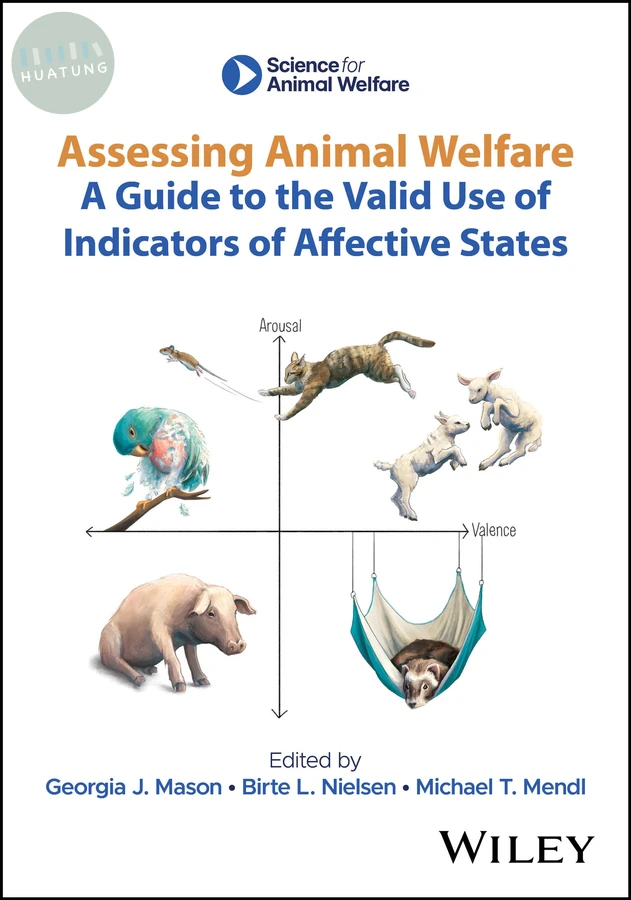
Assessing Animal Welfare
$2249元 定價: $2499 9折 可訂購
簡介
A clear, practical guide on how to use validated indicators of affective states
Assessing Animal Welfare is a guide on how to use accurate indicators to assess the welfare of animals. The basis for this book is construct validity: how we can validate different indicators that are commonly used to assess animal welfare and apply this knowledge when using these indicators.
Starting with two chapters on the challenges of assessing emotions and moods in animals, and the importance and basis of construct validation, the following chapters evaluate the validity of 11 indicators that range from being suitable for assessing short-term emotions to assessing cumulative negative affect over a lifetime. Each chapter further highlights the limitations of each indicator and provides clear, useful guidance on its interpretation to avoid associated pitfalls. The book also shows how different indicators can complement each other, with real-life examples showing how to put theory into practice. The final chapter concludes by discussing some of the remaining challenges.
Written by leading experts in their respective fields, Assessing Animal Welfare presents:
Five key approaches to assessing the construct validity of a welfare indicator: using humans as models; observing how indicators change in rewarding or punishing situations, or when in the presence of threats to/promoters of ancestral fitness; taking a pharmacological approach; and assessing co-variance with already validated indicators
Indicators of emotion, focusing on preference/avoidance, vocal signals, acute corticosteroid responses, body temperature and heart rate, ideal for assessing short-term events like handling, transport, etc.
Indicators of cumulative welfare focusing on abnormal repetitive behaviour, cellular aging, and hippocampal plasticity
Indicators of mood, focusing on judgement biases, play, the hormone DHEA, and measures of reward responsiveness, ideal for assessing effects of long-term situations such as housing conditions
How each valid indicator may sometimes yield false leads (suggesting affective states that are absent) or false null results (overlooking affective states that are present), and ways to avoid these pitfalls.
Assessing Animal Welfare serves as a clear and practical guide for animal welfare researchers, veterinarians, and students of animal welfare science, helping them evaluate and use the most accurate affective state indicators for a given situation.
目錄
List of Contributors vii
Endorsements ix
Acknowledgements x
1 Animal Welfare and Affective States 1
Michael T. Mendl, Elizabeth S. Paul, and Georgia J. Mason
2 Measuring the Unmeasurable: The Construct Validation of Affective State Indicators 26
Georgia J. Mason and Michael T. Mendl
Part 1 Indicators of Emotion 55
3 Preference and Avoidance Tests 57
Marsha L. Reijgwart, Thomas Ede, and Claudia M. Vinke
4 Vocal Signals 80
Avelyne S. Villain and Elodie F. Briefer
5 Acute Glucocorticoid Responses 103
Georgia J. Mason and Michael T. Mendl
6 Body Temperature and Heart Rate 121
Dorothy E.F. McKeegan and Neil P. Evans
Part 2 Indicators of Mood 143
7 Judgement Biases 145
Elizabeth S. Paul and Vikki Neville
8 Play Behaviour 163
Suzanne D.E. Held
9 Reactivity to Rewards 188
Rebecca K. Meagher and Carole Fureix
10 Dehydroepiandrosterone (DHEA) and Glucocorticoids-to-DHEA(S) Ratio 212
Jessica C. Whitham and Lance J. Miller
Part 3 Indicators of Cumulative Affective Experience 231
11 Abnormal Repetitive Behaviours 233
Georgia J. Mason and Lindsey Kitchenham
12 Telomere Length 273
Melissa Bateson and Luise A. Seeker
13 Hippocampal Structural Plasticity 294
Colline Poirier
14 The Importance of Construct Validation, and (More) Tools for Valid Use of Indicators – What Have We Learned and What Is Still Missing? 319
Birte L. Nielsen, Georgia J. Mason, and Michael T. Mendl
Index 331