此書籍沒有詳細資訊。
還沒有人留下心得,快來搶頭香!
為您推薦

類似書籍推薦給您
類似書籍推薦給您
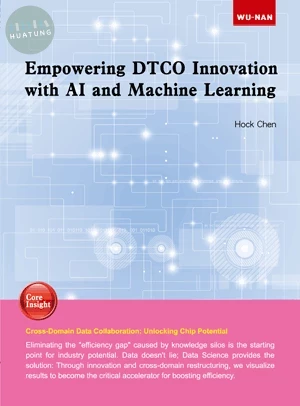
【簡介】 Core Insight: Cross-Domain Data Collaboration: Unlocking Chip Potential Eliminating the "efficiency gap" caused by knowledge silos is the starting point for industry potential. Data doesn't lie; Data Science provides the solution: Through innovation and cross-domain restructuring, we visualize results to become the critical accelerator for boosting efficiency. GenAI Reshaping the Future of Semiconductors Facing the immense challenge of the slowing pace of Moore's Law, the semiconductor industry urgently requires new breakthroughs. This book is specifically designed to solve the "Efficiency Black Hole" that consumes tens of billions of dollars annually in the industry. The Empowering DTCO Innovation with AI and Machine Learning offers readers a practical DTCO.ML Framework, demonstrating how to leverage Machine Learning (ML) and Generative AI (GenAI) technologies to inject new acceleration into chip manufacturing processes. Learn to master process variability and optimize chip energy efficiency, eliminating the time-consuming and costly physical tape-out trial-and-error cycle. You Will Master: How to use data to transform Yield improvement from relying on lengthy trial-and-error into a predictable, controllable process with Accelerated ROI; achieving significant Energy Efficiency (EE) leaps in every product iteration; and gaining a Time-to-Market (TTM) competitive advantage of several months for your team. Whether you are a chip design engineer, process R&D expert, or a manager seeking industry "re-acceleration" strategies, this book provides a validated AI-enabled strategy and execution blueprint. The future of DTCO starts here 【目錄】 Table of Contents Foreword AI-Driven Semiconductor Chip Design Efficiency and Productivity Revolution Part I: Design Technology Co-Optimization, DTCO Chapter 1 Overview and Evolution of DTCO 1.1 Principles of Design for Productivity 1.2 Design Methodology for Ultimate Efficiency 1.3 Future Directions of DTCO Chapter 2 Key Challenges and Strategies in Driving DTCO 2.1 Key Challenges in Implementing DTCO 2.2 Demand for Innovative Design Methods 2.3 Productivity Optimization Platform Development Chapter 3 Optimizing Chip Energy Efficiency and Productivity 3.1 Preparatory Work Before Project Initiation 3.2 Custom Cell and Timing Signoff Strategy 3.3 Process Optimization and Analysis Techniques 3.4 Compensation Mechanism Design and Implementation 3.5 Challenges and Demands of Near-Threshold Voltage Technology Part II: DTCO.ML ™ : Machine Learning-Driven Semiconductor Process Optimization Chapter 4 The Integration of Machine Learning and DTCO (DTCO.ML ™ ) 4.1 Virtual Wafer Data Modeling (Virtual Silicon) 4.2 Building and Inferring Regression Models 4.3 Application of Data Tracking and Production Optimization Chapter 5 Library Metric Extraction and Analysis System (libMetric ™ ) 5.1 Cell Timing and Power Modeling 5.2 Cell Feature Extraction 5.3 RO Simulation 5.4 Standard Cell Library Batch PPA Benchmarking Chapter 6 On-Chip Sensor Design and Integration (GRO Compiler) 6.1 Goal-Oriented RO Design 6.2 SPICE-to-Silicon Correlation 6.3 Process Monitoring and Optimization 6.4 On-Chip Effective Voltage Analysis 6.4.1 Local Voltage Distribution Monitoring 6.4.2 Compensation Strategy 6.4.3 Dynamic Timing Slack Alerts and Layout 6.5 GRO Automation Tool and Verification Process Chapter 7 Data Analysis and Machine Learning Platform (Copernic ™ ) 7.1 Data Standardization and Visualization 7.2 Cross-Domain Mapping of Multi-Dimensional Data 7.3 Design Flow Integration Strategy 7.3.1 WAT-aware Timing Re-K 7.3.2 WAT-CP Mapping and Correlation Analysis 7.3.3 OCV Analysis 7.4 OCV Analysis and Design Margin Optimization 7.5 Post-Silicon Analysis and Optimization Chapter 8 Chip Performance Rating Strategy and Optimization (Binning-PG ™ ) 8.1 Impact of Binning Strategy on Productivity 8.2 Chip Characteristics Analysis and Challenges 8.3 Binning Policy Generation (Binning-PG ™ ) 8.4 Automated Policy Generation and Optimization 8.5 On-chip Self-binning Application Part III: DTCO.GenAI ™ : Generative AI-Driven Chip Design Innovation Chapter 9 Generative AI and DTCO Integration (DTCO.GenAI ™ ) 9.1 Limitations of Traditional Modeling Methods 9.2 Following the Trail: Multivariate Normal Distribution 9.3 Virtual Silicon Data in DTCO (DTCO.VS) Chapter 10 Virtual Silicon Data Generation Technology (DTCO.VS) 10.1 Dataset Preparation 10.2 GAN-based Virtual Silicon (GAN-VS) 10.2.1 GAN Model 10.2.2 GAN Model Performance Evaluation 10.3 Diffusion Model-based Virtual Silicon (DM-VS) 10.3.1 Denoising Diffusion Probabilistic Model (DDPM)) 10.3.2 Diffusion Model Performance Evaluation Chapter 11 Generative AI-Driven Chip Efficiency Optimization and Modeling 11.1 WAT Super Resolution (WAT-SR) 11.2 High-Efficiency SPICE-Silicon Bias Modeling (He-SSBM) 11.2.1 Design Principle of One-shot SPICE-Silicon N/P Correlation 11.2.2 Design and Signoff Strategy Optimization 11.3 High-Fidelity Generative Monte Approximation (HΣ- GMA) 11.3.1 Limitations of Traditional Monte Carlo Methods 11.3.2 Innovative Application of Generative Neural Networks Chapter 12 Conclusion and Outlook 12.1 AI-Enhanced DTCO: Revolutionizing Chip Design and Process Optimization (DTCO.ML ™ ) 12.2 Generative AI-Driven Optimization (DTCO.GenAI ™ ) 12.3 EDA Innovation and Future Outlook Appendix Open Source Resource List Reference List Glossary of Terms

類似書籍推薦給您
Along with the maturing of blockchain technology, the scope of Web3 has been expanding from hash rate to crypto market, then from crypto market to metaverse. This book introduces the origin of the Web3 concept, before looking into the infrastructure of Web3, namely the blockchain and its main applications — the development of which started from the genesis block of BTC to date. The book also covers the key developing tracks of the current Web3 world, including DeFi, NFT, GameFi, DAO and Metaverse. A review of the "twins" of Web3 — investors and regulators — in the regulation of this field wraps up the discussion. Request Inspection Copy

類似書籍推薦給您
 資訊
資訊
 工程
工程
 數學與統計學
 機率與統計
機率與統計
 自然科學
自然科學
 健康科學
健康科學
 地球與環境
地球與環境
 建築、設計與藝術
 人文與社會科學
 教育
教育
 語言學習與考試
 法律
法律
 會計與財務
會計與財務
 大眾傳播
大眾傳播
 觀光與休閒餐旅
 考試用書
考試用書
 研究方法
研究方法
 商業與管理
商業與管理
 經濟學
經濟學
 心理學
心理學
 生活
生活
 生活風格商品
 參考書/測驗卷/輔材