此書籍沒有詳細資訊。
還沒有人留下心得,快來搶頭香!
為您推薦

類似書籍推薦給您

類似書籍推薦給您
【簡介】 Provides a comprehensive introduction to probability with an emphasis on computing-related applications This self-contained new and extended edition outlines a first course in probability applied to computer-related disciplines. As in the first edition, experimentation and simulation are favoured over mathematical proofs. The freely down-loadable statistical programming language R is used throughout the text, not only as a tool for calculation and data analysis, but also to illustrate concepts of probability and to simulate distributions. The examples in Probability with R: An Introduction with Computer Science Applications, Second Edition cover a wide range of computer science applications, including: testing program performance; measuring response time and CPU time; estimating the reliability of components and systems; evaluating algorithms and queuing systems. Chapters cover: The R language; summarizing statistical data; graphical displays; the fundamentals of probability; reliability; discrete and continuous distributions; and more. This second edition includes: improved R code throughout the text, as well as new procedures, packages and interfaces; updated and additional examples, exercises and projects covering recent developments of computing; an introduction to bivariate discrete distributions together with the R functions used to handle large matrices of conditional probabilities, which are often needed in machine translation; an introduction to linear regression with particular emphasis on its application to machine learning using testing and training data; a new section on spam filtering using Bayes theorem to develop the filters; an extended range of Poisson applications such as network failures, website hits, virus attacks and accessing the cloud; use of new allocation functions in R to deal with hash table collision, server overload and the general allocation problem. The book is supplemented with a Wiley Book Companion Site featuring data and solutions to exercises within the book. Primarily addressed to students of computer science and related areas, Probability with R: An Introduction with Computer Science Applications, Second Edition is also an excellent text for students of engineering and the general sciences. Computing professionals who need to understand the relevance of probability in their areas of practice will find it useful. 【目錄】 Preface to the Second Edition xiii Preface to the First Edition xvii Acknowledgments xxi About the Companion Website xxiii I The R Language 1 1 Basics of R 3 1.1 What is R? 3 1.2 Installing R 4 1.3 R Documentation 4 1.4 Basics 5 1.5 Getting Help 6 1.6 Data Entry 7 1.7 Missing Values 11 1.8 Editing 12 1.9 Tidying Up 12 1.10 Saving and Retrieving 13 1.11 Packages 13 1.12 Interfaces 14 1.13 Project 16 2 Summarizing Statistical Data 17 2.1 Measures of Central Tendency 17 2.2 Measures of Dispersion 21 2.3 Overall Summary Statistics 24 2.4 Programming in R 25 2.5 Project 30 3 Graphical Displays 31 3.1 Boxplots 31 3.2 Histograms 36 3.3 Stem and Leaf 40 3.4 Scatter Plots 40 3.5 The Line of Best Fit 43 3.6 Machine Learning and the Line of Best Fit 44 3.7 Graphical Displays Versus Summary Statistics 49 3.8 Projects 53 II Fundamentals of Probability 55 4 Probability Basics 57 4.1 Experiments, Sample Spaces, and Events 58 4.2 Classical Approach to Probability 61 4.3 Permutations and Combinations 64 4.4 The Birthday Problem 71 4.5 Balls and Bins 76 4.6 R Functions for Allocation 79 4.7 Allocation Overload 81 4.8 Relative Frequency Approach to Probability 83 4.9 Simulating Probabilities 84 4.10 Projects 89 5 Rules of Probability 91 5.1 Probability and Sets 91 5.2 Mutually Exclusive Events 92 5.3 Complementary Events 93 5.4 Axioms of Probability 94 5.5 Properties of Probability 96 6 Conditional Probability 104 6.1 Multiplication Law of Probability 107 6.2 Independent Events 108 6.3 Independence of More than Two Events 110 6.4 The Intel Fiasco 113 6.5 Law of Total Probability 115 6.6 Trees 118 6.7 Project 123 7 Posterior Probability and Bayes 124 7.1 Bayes’ Rule 124 7.2 Hardware Fault Diagnosis 131 7.3 Machine Learning and Classification 132 7.4 Spam Filtering 135 7.5 Machine Translation 137 8 Reliability 142 8.1 Series Systems 142 8.2 Parallel Systems 143 8.3 Reliability of a System 143 8.4 Series–Parallel Systems 150 8.5 The Design of Systems 153 8.6 The General System 158 III Discrete Distributions 161 9 Introduction to Discrete Distributions 163 9.1 Discrete Random Variables 163 9.2 Cumulative Distribution Function 168 9.3 Some Simple Discrete Distributions 170 9.4 Benford’s Law 174 9.5 Summarizing Random Variables: Expectation 175 9.6 Properties of Expectations 180 9.7 Simulating Discrete Random Variables and Expectations 183 9.8 Bivariate Distributions 187 9.9 Marginal Distributions 189 9.10 Conditional Distributions 190 9.11 Project 194 10 The Geometric Distribution 196 10.1 Geometric Random Variables 198 10.2 Cumulative Distribution Function 203 10.3 The Quantile Function 207 10.4 Geometric Expectations 209 10.5 Simulating Geometric Probabilities and Expectations 210 10.6 Amnesia 217 10.7 Simulating Markov 219 10.8 Projects 224 11 The Binomial Distribution 226 11.1 Binomial Probabilities 227 11.2 Binomial Random Variables 229 11.3 Cumulative Distribution Function 233 11.4 The Quantile Function 235 11.5 Reliability: The General System 238 11.6 Machine Learning 241 11.7 Binomial Expectations 245 11.8 Simulating Binomial Probabilities and Expectations 248 11.9 Projects 254 12 The Hypergeometric Distribution 255 12.1 Hypergeometric Random Variables 257 12.2 Cumulative Distribution Function 260 12.3 The Lottery 262 12.4 Hypergeometric or Binomial? 266 12.5 Projects 273 13 The Poisson Distribution 274 13.1 Death by Horse Kick 274 13.2 Limiting Binomial Distribution 275 13.3 Random Events in Time and Space 281 13.4 Probability Density Function 283 13.5 Cumulative Distribution Function 287 13.6 The Quantile Function 289 13.7 Estimating Software Reliability 290 13.8 Modeling Defects in Integrated Circuits 292 13.9 Simulating Poisson Probabilities 293 13.10 Projects 298 14 Sampling Inspection Schemes 299 14.1 Introduction 299 14.2 Single Sampling Inspection Schemes 300 14.3 Acceptance Probabilities 301 14.4 Simulating Sampling Inspection Schemes 303 14.5 Operating Characteristic Curve 308 14.6 Producer’s and Consumer’s Risks 310 14.7 Design of Sampling Schemes 311 14.8 Rectifying Sampling Inspection Schemes 315 14.9 Average Outgoing Quality 316 14.10 Double Sampling Inspection Schemes 318 14.11 Average Sample Size 319 14.12 Single Versus Double Schemes 320 14.13 Projects 324 IV Continuous Distributions 325 15 Introduction to Continuous Distributions 327 15.1 Introduction to Continuous Random Variables 328 15.2 Probability Density Function 328 15.3 Cumulative Distribution Function 331 15.4 The Uniform Distribution 332 15.5 Expectation of a Continuous Random Variable 336 15.6 Simulating Continuous Variables 338 16 The Exponential Distribution 341 16.1 Modeling Waiting Times 341 16.2 Probability Density Function of Waiting Times 342 16.3 Cumulative Distribution Function 344 16.4 Modeling Lifetimes 347 16.5 Quantiles 349 16.6 Exponential Expectations 351 16.7 Simulating Exponential Probabilities and Expectations 353 16.8 Amnesia 356 16.9 Simulating Markov 360 16.10 Project 369 17 Queues 370 17.1 The Single Server Queue 370 17.2 Traffic Intensity 371 17.3 Queue Length 372 17.4 Average Response Time 376 17.5 Extensions of the M/M/1 Queue 378 17.6 Project 382 18 The Normal Distribution 383 18.1 The Normal Probability Density Function 385 18.2 The Cumulative Distribution Function 387 18.3 Quantiles 389 18.4 The Standard Normal Distribution 391 18.5 Achieving Normality: Limiting Distributions 394 18.6 Projects 405 19 Process Control 407 19.1 Control Charts 407 19.2 Cusum Charts 411 19.3 Charts for Defective Rates 412 19.4 Project 416 V Tailing Off 417 20 The Inequalities of Markov and Chebyshev 419 20.1 Markov’s Inequality 420 20.2 Algorithm Runtime 426 20.3 Chebyshev’s Inequality 427 Appendix A: Data: Examination Results 433 Appendix B: The Line of Best Fit: Coefficient Derivations 437 Appendix C: Variance Derivations 440 Appendix D: Binomial Approximation to the Hypergeometric 446 Appendix E: Normal Tables 448 Appendix F: The Inequalities of Markov and Chebyshev 450 Index to R Commands 453 Index 457 Postface
類似書籍推薦給您
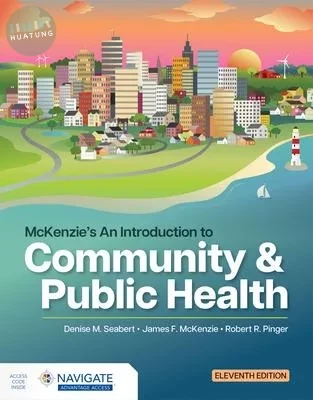
【簡介】 Now in its eleventh edition, McKenzie’s An Introduction to Community & Public Health includes the latest topics, trends, and statistics in this evolving field. With an emphasis on developing the knowledge and skills necessary for a career in health education and health promotion, this best-selling introductory text covers such topics as epidemiology, community organizations, program planning, minority health, mental health, environmental health, drug use and abuse, safety, and occupational health. Offers a chapter opening scenario and scenario analysis and response at the end of each chapter to help students consider how the chapter content applies in real life.Includes updated and expanded discussion of twenty-first century public health challenges such as opioid information and prioritization of public health preparedness in the U.S. and internationallyCovers the World Health Organization goals and COVID related activities as well as updated content related to Health and Human Services (HHS) priorities and critical Center for Disease Control and Prevention (CDC) activities.Incorporates updated statistics and new information on evidence-based interventions; the health of adolescents, young adults, and adults; healthcare delivery in the U.S., and more.Features added content regarding vaping, JUUL, e-cigarettes, and the Tobacco movement, as well as updates regarding marijuana legalization.Offers a revised and renamed Chapter 10, that has been expanded to better introduce the concept of minority health and health disparities. Provides new information on mental illness and college students, mental disorders and services among immigrants, peer support services for treating mental illness, as well as content on the 21st Century Cures Act.Includes new tables, boxes, and photographs, including boxes to emphasize Health People 2030 goals and other key topics. Introductory Community and Public Health courses in departments of health education, public health, health science, health promotion, community health, nursing and HPER. (c) 2026 576 pages

類似書籍推薦給您
【簡介】 The goal of this textbook is to introduce and study automorphic representations, objects at the very core of the Langlands Program. It is designed for use as a primary text for either a semester or a year-long course, for the independent study of advanced topics, or as a reference for researchers. The reader is taken from the beginnings of the subject to the forefront of contemporary research. The journey provides an accessible gateway to one of the most fundamental areas of modern mathematics, with deep connections to arithmetic geometry, representation theory, harmonic analysis, and mathematical physics. The first part of the text is dedicated to developing the notion of automorphic representations. Next, it states a rough version of the Langlands functoriality conjecture, motivated by the description of unramified admissible representations of reductive groups over nonarchimedean local fields. The next chapters develop the theory necessary to make the Langlands functoriality conjecture precise. Thus supercuspidal representations are defined locally, cuspidal representations and Eisenstein series are defined globally, and Rankin-Selberg L-functions are defined to give a link between the global and local settings. This preparation complete, the global Langlands functoriality conjectures are stated and known cases are discussed. This is followed by a treatment of distinguished representations in global and local settings. The link between distinguished representations and geometry is explained in a chapter on the cohomology of locally symmetric spaces (in particular, Shimura varieties). The trace formula, an immensely powerful tool in the Langlands Program, is discussed in the final chapters of the book. Simple versions of the general relative trace formulae are treated for the first time in a textbook, and a wealth of related material on algebraic group actions is included. Outlines for several possible courses are provided in the Preface.
 資訊
資訊
 工程
工程
 數學與統計學
 機率與統計
機率與統計
 自然科學
自然科學
 健康科學
健康科學
 地球與環境
地球與環境
 建築、設計與藝術
 人文與社會科學
 教育
教育
 語言學習與考試
 法律
法律
 會計與財務
會計與財務
 大眾傳播
大眾傳播
 觀光與休閒餐旅
 考試用書
考試用書
 研究方法
研究方法
 商業與管理
商業與管理
 經濟學
經濟學
 心理學
心理學
 生活
生活
 生活風格商品
 參考書/測驗卷/輔材