此書籍沒有詳細資訊。
還沒有人留下心得,快來搶頭香!
為您推薦

類似書籍推薦給您
An Introduction to Optimization Accessible introductory textbook on optimization theory and methods, with an emphasis on engineering design, featuring MATLAB® exercises and worked examples Fully updated to reflect modern developments in the field, the Fifth Edition of An Introduction to Optimization fills the need for an accessible, yet rigorous, introduction to optimization theory and methods, featuring innovative coverage and a straightforward approach. The book begins with a review of basic definitions and notations while also providing the related fundamental background of linear algebra, geometry, and calculus. With this foundation, the authors explore the essential topics of unconstrained optimization problems, linear programming problems, and nonlinear constrained optimization. In addition, the book includes an introduction to artificial neural networks, convex optimization, multi-objective optimization, and applications of optimization in machine learning. Numerous diagrams and figures found throughout the book complement the written presentation of key concepts, and each chapter is followed by MATLAB® exercises and practice problems that reinforce the discussed theory and algorithms. The Fifth Edition features a new chapter on Lagrangian (nonlinear) duality, expanded coverage on matrix games, projected gradient algorithms, machine learning, and numerous new exercises at the end of each chapter. An Introduction to Optimization includes information on: The mathematical definitions, notations, and relations from linear algebra, geometry, and calculus used in optimization Optimization algorithms, covering one-dimensional search, randomized search, and gradient, Newton, conjugate direction, and quasi-Newton methods Linear programming methods, covering the simplex algorithm, interior point methods, and duality Nonlinear constrained optimization, covering theory and algorithms, convex optimization, and Lagrangian duality Applications of optimization in machine learning, including neural network training, classification, stochastic gradient descent, linear regression, logistic regression, support vector machines, and clustering. An Introduction to Optimization is an ideal textbook for a one- or two-semester senior undergraduate or beginning graduate course in optimization theory and methods. The text is also of value for researchers and professionals in mathematics, operations research, electrical engineering, economics, statistics, and business.

類似書籍推薦給您
In today's world, we are increasingly exposed to the words "machine learning" (ML), a term which sounds like a panacea designed to cure all problems ranging from image recognition to machine language translation. Over the past few years, ML has gradually permeated the financial sector, reshaping the landscape of quantitative finance as we know it. An Introduction to Machine Learning in Quantitative Finance aims to demystify ML by uncovering its underlying mathematics and showing how to apply ML methods to real-world financial data. In this book the authors Provide a systematic and rigorous introduction to supervised, unsupervised and reinforcement learning by establishing essential definitions and theorems. Dive into various types of neural networks, including artificial nets, convolutional nets, recurrent nets and recurrent reinforcement learning. Summarize key contents of each section in the tables as a cheat sheet. Include ample examples of financial applications. Showcase how to tackle an exemplar ML project on financial data end-to-end. Provide a GitHub repository https://github.com/deepintomlf/mlfbook.git that contains supplementary Python codes of all methods/examples. Featured with the balance of mathematical theorems and practical code examples of ML, this book will help you acquire an in-depth understanding of ML algorithms as well as hands-on experience. After reading An Introduction to Machine Learning in Quantitative Finance, ML tools will not be a black box to you anymore, and you will feel confident in successfully applying what you have learnt to empirical financial data! Sample Chapter(s) Preface Chapter 1: Overview of Machine Learning and Financial Applications Request Inspection Copy Contents: Preface About the Authors Acknowledgments Disclaimer Listings Overview of Machine Learning and Financial Applications Supervised Learning Linear Regression and Regularization Tree-based Models Neural Networks Cluster Analysis Principal Component Analysis Reinforcement Learning Case Study in Finance: Home Credit Default Risk Bibliography Index Readership: This textbook is suitable for MSc students or final year undergraduate students in financial mathematics, machine learning or computational finance. It would serve as a graduate textbook in introducing machine learning and its applications in quantitative finance. It may also be appropriate for those interested in pursuing a career in quantitative finance or for practitioners in the financial sector who wish to develop an in-depth understanding of machine learning and its applications to finance.

類似書籍推薦給您
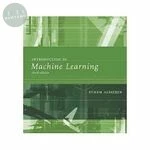
Introduction to Machine Learning 系列名:Adaptive Computation and Machine Learning series ISBN13:9780262043793 出版社:Mit Pr 作者:Ethem Alpaydin (OEzyegin University) 裝訂/頁數:精裝/712頁 規格:20.3cm*22.9cm*3.7cm (高/寬/厚) 版次:4 出版日:2020/03/24 內容簡介 A substantially revised fourth edition of a comprehensive textbook, including new coverage of recent advances in deep learning and neural networks.
類似書籍推薦給您
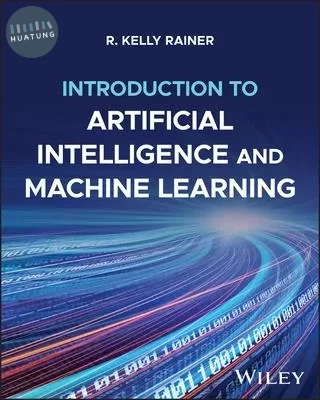
【簡介】 Helps students unlock the power of AI and Machine Learning to achieve business success and future-proof their careersArtificial intelligence and machine learning are transforming the modern workplace, making AI literacy a critical skill for business professionals. Introduction to Artificial Intelligence and Machine Learning equips students with essential AI/ML knowledge and practical skills, enabling them to leverage cutting-edge technology in today’s data-driven world. With an engaging and accessible approach, this textbook ensures that students--regardless of technical background--gain a working knowledge of AI/ML systems. Concise, easy-to-digest chapters blend foundational concepts with real-world applications to help students develop the expertise needed to implement AI/ML solutions across industries. For instructors, the textbook offers flexible teaching methodologies, whether focusing on conceptual discussions, light technology applications, or full AI/ML projects. With a clear business perspective and a strong emphasis on AI governance and deployment, the textbook prepares students to navigate the future of AI in the workplace with confidence. Helping students build a solid foundation in key concepts while exploring strategic implementation and ethical considerations, Introduction to Artificial Intelligence and Machine Learning is ideal for undergraduate and graduate students in business, engineering, and healthcare programs taking courses such as Business Analytics, Information Systems, and AI Strategy. AN INTERACTIVE, MULTIMEDIA LEARNING EXPERIENCEThis textbook includes access to an interactive, multimedia e-text. Icons throughout the print book signal corresponding digital content in the e-text. Video Clips created by the author complement the text and engage students more deeply with AI/ML concepts and applications.Interactive Figures and Charts are integrated throughout the enhanced e-text to provide engaging visual representations of the material.Interactive Questions appear in each chapter of the enhanced e-text, providing students with immediate feedback to strengthen learning.
 資訊
資訊
 工程
工程
 數學與統計學
 機率與統計
機率與統計
 自然科學
自然科學
 健康科學
健康科學
 地球與環境
地球與環境
 建築、設計與藝術
 人文與社會科學
 教育
教育
 語言學習與考試
 法律
法律
 會計與財務
會計與財務
 大眾傳播
大眾傳播
 觀光與休閒餐旅
 考試用書
考試用書
 研究方法
研究方法
 商業與管理
商業與管理
 經濟學
經濟學
 心理學
心理學
 生活
生活
 生活風格商品
 參考書/測驗卷/輔材