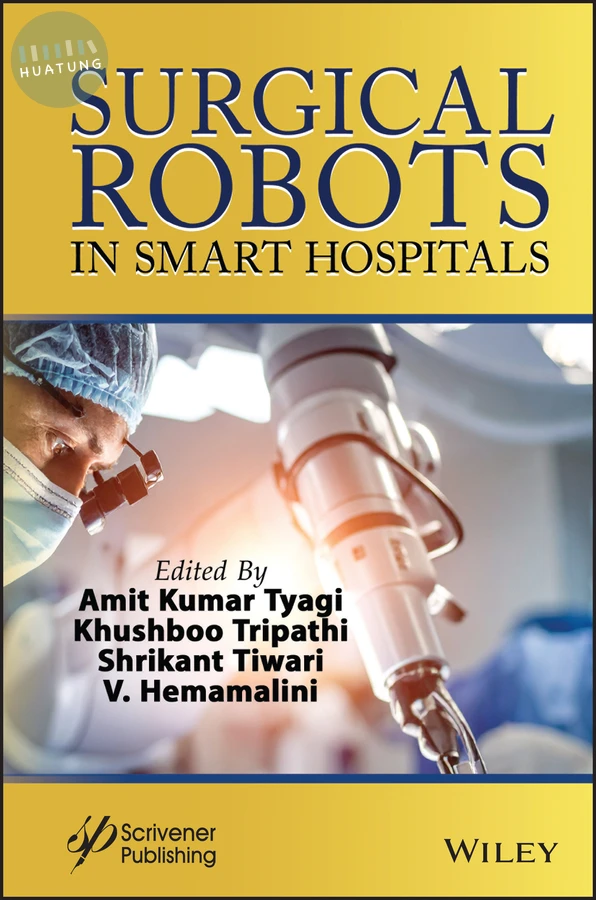
Surgical Robots in Smart Hospitals
$8323元 定價: $9248 9折 可訂購
簡介
Transform your understanding of modern medicine with this essential book, which provides a comprehensive overview of how surgical robots are reshaping healthcare and enabling the rise of smart hospitals. The rapid evolution of technology has revolutionized the field of medicine, and nowhere is this more evident than in the integration of surgical robots into modern healthcare systems. As we stand on the brink of a new era in medical science, the concept of smart hospitals has emerged as a beacon of innovation, efficiency, and precision. This book explores the transformative role of robotic systems in surgical procedures and their integration into the broader framework of intelligent healthcare ecosystems. The journey of surgical robots began decades ago, with the first robotic-assisted surgeries marking a significant milestone in medical history. Since then, advancements in robotics, artificial intelligence, machine learning, and data analytics have propelled these systems into the forefront of modern surgery. This book is designed to provide a comprehensive overview of the current state of surgical robotics and their role in smart hospitals. It also explores the ethical and societal implications of this technological revolution. As robots take on more significant roles in healthcare, questions about accountability, privacy, and the human touch in medicine become increasingly important. Readers will find this volume: Provides a thorough introduction to surgical robots, including their history, types, benefits, and current state of adoption;
Explores the infrastructure requirements for surgical robots, including operating room design, networking, and data management systems;
Covers a range of clinical applications for surgical robots, including general surgery, urology, gynecology, orthopedics, and neurosurgery;
Discusses training programs for surgical robots, including simulation-based training, mentorship, and certification for surgical robot operators;
Evaluates the future directions for surgical robots, including the potential of artificial intelligence, augmented reality, and haptic feedback.
Audience Surgeons and surgical teams, hospital administrators, healthcare executives and policymakers, engineers, and researchers involved with robotics in the medical field.
目錄
Preface xxix
Part 1: Fundamentals of Surgical Robots in Smart Hospitals 1
1 Defining Smart Hospitals 3
V. Karthikeyan, Y. Palinvisu and Anita Antwiwaa
1.1 Introduction and Motivation 4
1.2 Materials and Methods 6
1.3 Analytical Requirements for Intelligent Healthcare Facilities 9
1.4 Integration of IT Environments in Smart Hospitals 11
1.5 Improving Connectivity and Efficiency 13
1.6 Revolutionizing Healthcare with Cutting-Edge Technology 16
1.7 Optimizing Operations and Improving Patient Care 18
1.8 Integration of Medical Devices in Smart Hospitals 21
1.9 Interoperability and Research Data Export 23
1.10 Conclusion 25
2 AI-Driven IoT, Federated Learning, and Surgical Robotics: Revolutionizing Smart Healthcare 31
Garima Jain, Ankush Jain, Amita Shukla and Prashant Kumar
2.1 Introduction 32
2.2 Surgical Robots in Smart Hospitals: Revolutionizing Precision and Efficiency 36
2.3 Architecture of an IoT-Aided Robotic System 38
2.4 Role of AI in IoT-Aided Robotics 42
2.5 AI-Driven IoT, Federated Learning, and Surgical Robotics: Revolutionizing Smart Healthcare 43
2.6 AI-Driven IoT, Federated Learning, and Robotics: The Current Utilization and Transformation of Smart Healthcare 47
2.7 AI-Driven IoT, Federated Learning, Surgical Robotics, and Block Chain for Secure Collaborative EHR Analytics 50
2.8 Integrating IoT, Federated Learning, Surgical Robotics and AI in Healthcare: Current Applications and
Motivations 52
2.9 Integration of IoT-Based Robotic Healthcare Systems with Robotic Assisted Surgery 53
2.10 Challenges and Future Directions in Federated Learning (FL) and AI-Driven Robotic Surgery: Overcoming Barriers to Collaborative Machine Learning 55
2.11 Conclusion 56
3 Off-Line Robot Programming: Methods and Tools 59
M. Anand, T. M. Sheeba, S. Albert Antony Raj, A. S. Anshy Princella and J. S. Femilda Josephin
3.1 Introduction 60
3.2 Off-Line Programming Methods and Tools 61
3.3 Benefits of Offline Programming 62
3.4 Applications of OLP 63
3.5 Impact on Small Batch Manufacturing 64
3.6 Tools for Offline Programmed Robots 65
3.7 Common Misconceptions and Misunderstandings about OLP 70
3.8 Graphical 3D Model Simulator 71
3.9 Offline Programming of Industrial Robots 74
3.10 Tips for Robot Offline Programming 77
3.11 Conclusion 81
4 Surgical Robots in Urology and Gynecology 83
Neha Ramesh, Praveen Joe I. R. and Vijay John
4.1 Introduction 84
4.2 Historical Perspective on Robotic Surgery in Urology 85
4.3 The da Vinci Surgical System: Architecture and Advancements 86
4.4 Applications of Robotic Surgery in Urology 87
4.5 Emerging Technologies in Robotic Urology 90
4.6 Robotic-Assisted Gynecological Procedures 91
4.7 Efficacy and Safety of Robotic-Assisted Surgery in Gynecology 95
4.8 Technical Aspects and Components of Robotic Surgical Systems 95
4.9 Advancing Robotic Platforms 97
4.10 Training Programs and Implementation Strategies 98
4.11 Comparative Analysis of Robotic Surgery in Urology and Gynecology 101
4.12 Challenges and Controversies 102
4.13 Future Directions 103
4.14 Conclusion 104
5 Urology and Gynecology: Clinical Applications and Models of Surgical Robots 107
Snehal P. Bhagat, Amol P. Bhagat, Nikhil Band and Milind R. Dhande
5.1 Introduction 108
5.2 Models of Surgical Robot in Urology and Gynecology 112
5.3 Python-Based Implementation of Surgical Robot Model in Urology and Gynecology 117
5.4 Integration of Artificial Intelligence and Machine Learning in Urology and Gynecology Robotics Surgery 120
5.5 Conclusion 122
6 Top Algorithms in Machine Learning for Predicting Insights in Smart Applications 125
Nareen Jan, Javaid A. Sheikh, Immad A. Shah and Tanuj Surve
6.1 Introduction 126
6.2 Machine Learning Algorithms 127
6.3 Applications of Machine Learning Algorithms 140
7 Smart Hospitals in Modern Era 151
Roopa Devi E.M., Shanthakumari R., Jayaswati P. and Mythili M.
7.1 Introduction 152
7.2 The Evolution of Smart Hospital 153
7.3 Key Components of Smart Hospital 154
7.4 Smart Hospital Design 157
7.5 Architecture of Smart Hospitals 161
7.6 AI Integration in Smart Hospitals 165
7.7 Internet of Things (IoT) in Smart Hospitals 167
7.8 Applications from Intelligent Hospitals 171
7.9 Challenges for Smart Cities 174
7.10 Comparing Traditional Hospitals and Smart Hospitals 178
7.11 Future Scope of Smart Hospitals 180
7.12 Conclusion 181
8 Revolutionizing Surgery in Smart Hospital with Robotics Techniques 185
Sarita, Khushboo Tripathi and Kashish Kumari
8.1 Introduction to Surgical Robots 186
8.2 Evolution of Robotic Surgeries in Healthcare 187
8.3 Working of Surgical Robots 190
8.4 Benefits and Challenges of Surgical Robots in Smart Hospitals 191
8.5 AI in Surgical Robot 193
8.6 Future of Surgical Robots and Smart Hospitals 194
8.7 Disinfection Robotics 195
8.8 Patient Care Robotics 197
8.9 Supply Chain Robotics and Logistics in Healthcare 199
8.10 Benefits of Robotic Integration in Healthcare 199
8.11 Overcoming Implementation Challenges 200
8.12 Real-World Applications of Surgical Robots 2018.13 Conclusion 202
8.14 Future Scope 203
Part 2: Method and Applications of Surgical Robots in Smart Hospitals 207
9 Applications of Fog, Edge, and Cloud-Based Deployment of AI-Infused Metaverse Integration in Smart Healthcare 209
Ajeet Kumar Sharma, Saurabh Singhal, Avinash Kumar Sharma and Rakesh Kumar
9.1 Introduction 210
9.2 Computing Paradigms: Cloud, Edge, and Fog Computing 213
9.3 Cloud-Based AI Deployment in the Metaverse for Smart Healthcare 217
9.4 Edge-Based AI Deployment in AI-Infused Metaverse Healthcare 219
9.5 Fog-Based AI Deployment in AI-Infused Metaverse Healthcare 221
9.6 Comparative Analysis of Cloud, Edge, and Fog Deployment in AI-Infused Metaverse Healthcare 222
9.7 Future Trends and Research Directions in AI-Driven Healthcare 223
9.8 Conclusion 225
10 Intelligent Chatbot for Personalized Mental Healthcare Support 229
R. Gayathri, T. Perarasi, R. Ramkumar and M. Adbullah
10.1 Introduction 230
10.2 Methodology 235
10.3 Continuous Improvement 242
10.4 Proposed Work Modules 242
10.5 Results and Discussion 246
10.6 Conclusion and Future Work 249
11 Medical Sensor Network, Edge Computing, and Blockchain for Efficient Medical Data Exchange 253
Amit Kumar Tyagi and Richa
11.1 Introduction to Medical Sensor Network, Blockchain Technology and Edge Computing: Challenges and Future Scope 254
11.2 Background Work 255
11.3 Medical Sensor Networks in Healthcare: Overview, Types, Importance and Applications 257
11.4 Edge Computing in Healthcare: Definition, Concepts, Advantages and Challenges and Opportunities 258
11.5 Blockchain Technology in Healthcare: Principles, Use Cases and Benefits and Challenges 259
11.6 Blockchain, Medical Sensor Networks, and Edge Computing Integration for a Safer, Secure Healthcare
Services 262
11.7 Use Cases and Applications of Emerging Technology in Medical Data Exchanges 265
11.8 Issue and Challenges Toward Using Technologies in Healthcare Sector 267
11.9 Future Research Opportunities Toward Using Edge Computing, Blockchain, and Medical Sensor Networks in Healthcare Sector 272
11.10 Conclusion 274
12 Impact of AI on Robotics Surgery: A Comprehensive Overview 279
M. Ramprasath, Elangovan G., Prakash Duraisamy and V. Kavitha
12.1 Introduction 280
12.2 Related Works 284
12.3 Exploring the Moral and Legal Environment of RAS 291
12.4 Computer Vision and Neurological Surgery 294
12.5 Neural Surgery and Robotics 297
12.6 Conclusion 299
13 Enhancing Healthcare and Monitoring Systems with Wearable Devices 305
Shrikant Tiwari, Kanchan Naithani and Ramesh Wadawadagi
13.1 Introduction 305
13.2 Technology Behind Wearable Devices 308
13.3 Wireless Connectivity and Integration with Other Devices 311
13.4 Applications of Wearable Devices in Healthcare 314
13.5 Design and Development of Wearable Devices 318
13.6 Data Analysis and Interpretation 323
13.7 Ethical and Legal Considerations 326
13.8 Future Directions and Opportunities 329
13.9 Conclusion 332
14 Surgical Robots in Smart Hospitals: Enhancing Precision and Patient Outcomes 339
Arun Kumar Singh, Juhi Singh, Shishir Singh Chauhan and Ankit Chauhan
14.1 Introduction 340
14.2 Background and Literature Review 342
14.3 Smart Hospitals: The Ecosystem of the Future 347
14.4 Proposed Methodology for Integration 350
14.5 Advancing Sustainable Development Goals 355
14.6 Conclusion and Statistical Analysis 356
14.7 Future Research Directions 357
15 Integrating Blockchain and Telerobotic in Orthopedics: Advancing Secure and Remote Surgical Innovations 363
A. Ritu and A. Eshaan
15.1 Introduction 364
15.2 Related Work 365
15.3 Proposed Methodology 367
15.4 Conclusion 373
16 Improving Lung Cancer Detection Using Hybrid Features and Optimized through VGG-16 377
A. Ritu and A. Eshaan
16.1 Introduction 378
16.2 Literature Review 379
16.3 Material and Methods Used 381
16.4 Results and Discussion 384
16.5 Conclusion and Future Scope 392
Part 3: Issues and Challenges Towards Implementing Surgical Robots in Smart Hospitals 395
17 Education and Certification for Surgical Robot Operators 397
V. Shyamala Susan, K. Chitra Chellam, K.S. Anushya and Ir. Bambang Sugiyono Agus Purwono
17.1 Introduction 398
17.2 Literature Survey 398
17.3 Pathways Leading to Becoming a Surgical Robot Operator 400
17.4 Hospital Privileging and Credentialing 401
17.5 Recredentialing and Ongoing Competency Evaluation 405
17.6 Certification Requirements for Surgical Robot Operators 406
17.7 Continuing Medical Education (CME) and Skill Maintenance 412
17.8 Robotic Surgery Training Issues and Evolving Directions 416
17.9 Ethical Considerations in Robotic Surgery Training 425
17.10 Conclusion 430
18 Enhancing Healthcare Cybersecurity with AI-Driven Threat Intelligence: Proactive Defense against Evolving Cyber Threats 437
Emmanuel Innocent Umoh, Hussaini Bishara and Avinash Kumar Sharma
18.1 Introduction 437
18.2 The Evolving Healthcare Threat Landscape 440
18.3 AI-Driven Threat Intelligence Framework for Healthcare 447
18.4 AI-Driven Cybersecurity in Healthcare: Strategies, Implementation, and Case Studies 455
18.5 Future Directions and Proposed Model to Enhance Healthcare Cybersecurity 462
18.6 Conclusion 466
19 Advancements and Challenges in IoT Adoption for Healthcare: A Review 469
Ashok Kumar Jayaraman, Gayathri Ananthakrishnan, Anugna Yakkala, Pavan Tej P. G. and Tina Esther Trueman
19.1 Introduction 470
19.2 IoT Communication Models 472
19.3 Issues and Challenges in Medical Domain 488
19.4 Artificial Intelligence of Things (AIoT) 498
19.5 Conclusion 501
Part 4: Near Future Development Towards Using Surgical Robots in Smart Hospitals 511
20 Intelligent Medical Business Assistant: Transforming Hospital Efficiency Through Advanced Analytics 513
Ahmed A. Esmail, Sayed M. Abdallah, Mohamed A. Elsayed, Ahmed E. Mohamed, Mostafa H. Fawzy, Ahmed Ismail Ebada and Aya M. Al-Zoghby
20.1 Introduction 515
20.2 Related Work 517
20.3 Methodology 524
20.4 Results and Dataset 538
20.5 Conclusion 541
21 Next-Generation Industrial Robots: Design and Development 547
Yash Suhas Jawale, Praveen Joe I. R. and Vijay John
21.1 Introduction 548
21.2 Future Requirements 550
21.3 Conclusion 568
22 A Deep Learning–Based Expression Recognition Analysis Assistant for Psychologists 571
Harjyot Singh Bagga, Sanjoi Sethi, Rishab Goswami, Annapurna Jonnalagadda and Ushus E.Z.
22.1 Introduction 572
22.2 Background 573
22.3.1 Text 577
22.4 Design Approach and Details 582
22.5 Result Screenshots 587
22.6 Conclusions 597
23 Future Directions for Surgical Robots in Smart Hospitals 599
A. Sivasangari, V.J.K. Kishore Sonti, J. Cruz Antony, E. Murali and D. Deepa
23.1 Introduction 600
23.2 Increased Influence of Robotics in Healthcare 602
23.3 AI's Role in Evolution of Modern Healthcare Industry 607
23.4 Integration of Robotics and AI in the Development of Advanced Surgical Robots 611
23.5 Smart Hospitals: From Ease of Registration to Remote Surgery and Teleoperated Haptic Technology 614
23.6 Futuristic Implications of Surgical Robots 621
23.7 Conclusion 622
24 The Prospective of Artificial Intelligence-Integrated Robotics Towards Orthopedics and Neurosurgery 627
Chandana Mohanty, Priya Das, Swati Swayamsiddha and Sarita Nanda
24.1 Introduction 628
24.2 AI Robotics 630
24.3 Applications of AI-Robotics in Orthopedics Field 634
24.4 Applications of AI Robotics in Neurosurgery Field 639
24.5 Potential Impact of AI Robotics and Future Implications 643
24.6 Challenges and Further Research Directions 645
24.7 Conclusion 646
25 Innovative Approaches in Smart Healthcare: Artificial Intelligence Techniques Via Federated Learning 657
Shrikant Tiwari, Kanchan Naithani and Ramesh S. Wadawadagi
25.1 Introduction 658
25.2 Foundations of Artificial Intelligence in Healthcare 662
25.3 Federated Learning in Healthcare 664
25.4 Decentralized Model Training 670
25.5 Case Studies 674
25.6 Interoperability and Standards 680
25.7 Future Directions and Emerging Technologies 685
25.8 Conclusion 687
References 688
Index 693