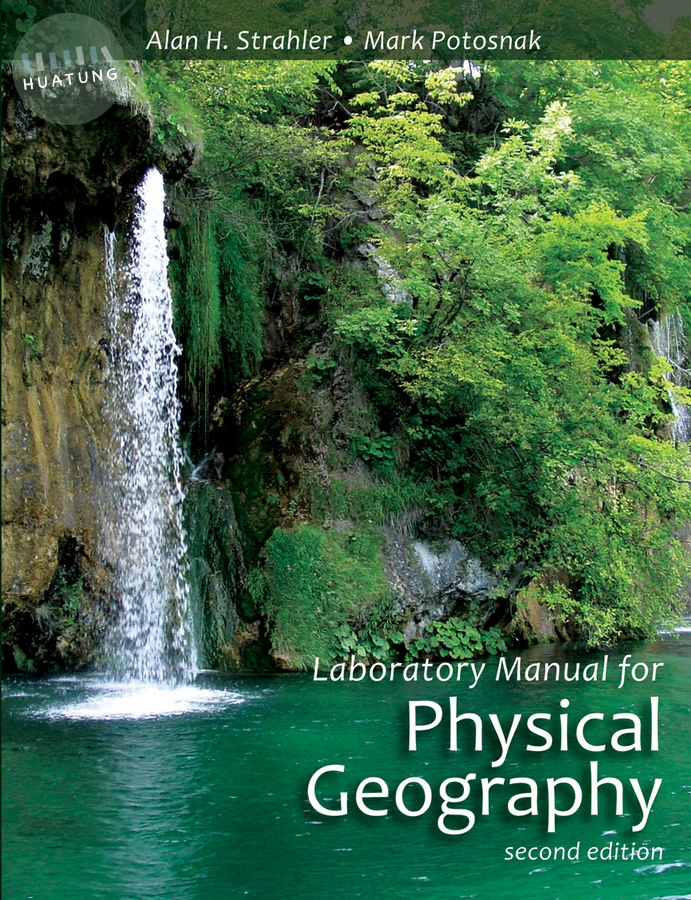

Laboratory Manual for Physical Geography
$3105元可訂購
簡介
This student-friendly, interactive lab manual presents activities and experiments that enhance students’ ability to both visualize and understand physical geographic topics. In a clear and concise tone, the manual requires students to first apply information they learned and then to critically evaluate the information.
目錄
1: Our Place in the Sun 1-A, Latitude and Longitude
1-B, Standard Time and World Time Zones
1-C, Equinoxes and Solstices
1-D, Comparing Map Projection
1-E, Great Circle Routes and Rhumb Lines 2: The Earth's Global Energy Balance
2-A, Insolation and Latitude
2-B, The Annual Cycle of Insolation
2-C, Duration of Sunlight at Different Latitudes 3: Air Temperature
3-A, Conversion of Temperature Scales
3-B, The Daily Cycles of Net Radiation and Air Temperature
3-C, The Daily Temperature Range
3-D, The Annual Cycle of Air Temperature
3-E, Drawing Isotherms 4: Atmospheric Moisture and Precipitation
4-A, Relative Humidity and the Dew-Point Temperature
4-B, Adiabatic Cooling of Rising Air
4-C, Adiabatic Warming and the Rain Shadow 5: Winds and Global Circulation
5-A, Converting Barometric Pressures
5-B, Pressure Versus Altitude
5-C, Isobars on the Surface Weather Map
5-D, The Wind Rose and Global Wind Belts
5-E, Upper Air Winds. 6: Weather Systems
6-A, Qualities of Various Air Masses
6-B, World Weather on a Day in July
6-C, Air Masses Around the World on a Day in July
6-D, Interpreting the Daily Weather Map
6-E, Anatomy and Geography of Tropical Cyclones 7: Global Climates
7-A, Seasonal Rainfall Contrasts in the Wet-Dry Tropical Climate
7-B, Climographs of Low-Latitude Climates
7-C, TheSubtropical Desert Temperature Regime
7-D, Climographs of Midlatitude and High-Latitude Climates
7-E, Identifying Koppen Climates 8: Biogeographic Processes
8-A, Energy Flow in Ecosystems
8-B, Photosynthesis and Carbon Dioxide Concentration 9: Global Biogeography
9-A, The Forest Biome
9-B, Savanna, Grassland, Desert, and Tundra Biomes 10: Global Soils
10-A, Soil Textures
10-B, Soil Orders and Climate 11: Earth Materials
11-A, The Igneous Rocks and their Minerals
11-B, Size Grades of Sediment Particles
11-C, Geologic Maps and Structure Sections 12: The Lithosphere and Plate Tectonics
12-A, The Lithospheric Plates
12-B, Kinds of Plate Junctions and their Meaning
12-C, Using Quasars to Tell How Fast the Plates Move 13: Volcanic and Tectonic Landforms
13-A, Using Graphic Scales to Measure Distances
13-B, The United States Land Office Grid
Exercise 13-C, Mount Shasta A Statovolcano
13-D, Shield Volcanoes of Hawaii
13-E, Volcanoes and Plate Tectonics
13-F, Fault Scarps of the Klamath Lakes Region. 14: Weathering and Mass Wasting
14-A, Exfoliation Domes of the Yosemite Valley
14-B, The Great Turtle Mountain Landslide 15: Fresh Water of the Continents
15-A, The Annual Cycle of Rise and Fall of the Water Table
15-B, Flood Regimes and Climate
15-C, Evaporation from American Lakes
15-D, Sinkholes of the Kentucky Karst Region 16: Landforms Made by Running Water
16-A, Niagara Falls
16-B, Alluvial Terraces
16-C, Floodplains and their Meanders
16-D, Alluvial Fans of Death Valley, California 17: Landforms and Rock Structure
17-A, Mesas, Buttes, and Cliffs
17-B, Domes and their Hogbacks
17-C, Mountain Ridges on Folded Strata
17-D, Stone Mountain a Granite Monadnock
17-E, A Volcanic Neck and its Radial Dikes 18: Landforms Made by Waves and Wind
18-A, The Ria Coast of Brittany a Youthful Shoreline
18-B, Coastal Sand Bars
18-C, Barrier Island Coasts
18-D, The Ocean Tide
18-E, Crescent Dunes and Sand Seas 19: Glacial Landforms and the Ice Age
19-A, Living Glaciers of Alaska and British Columbia
19-B, Glacial Landforms of the Rocky Mountains
19-C, Moraines and Outwash Plains
19-D, Eskers and Drumlins