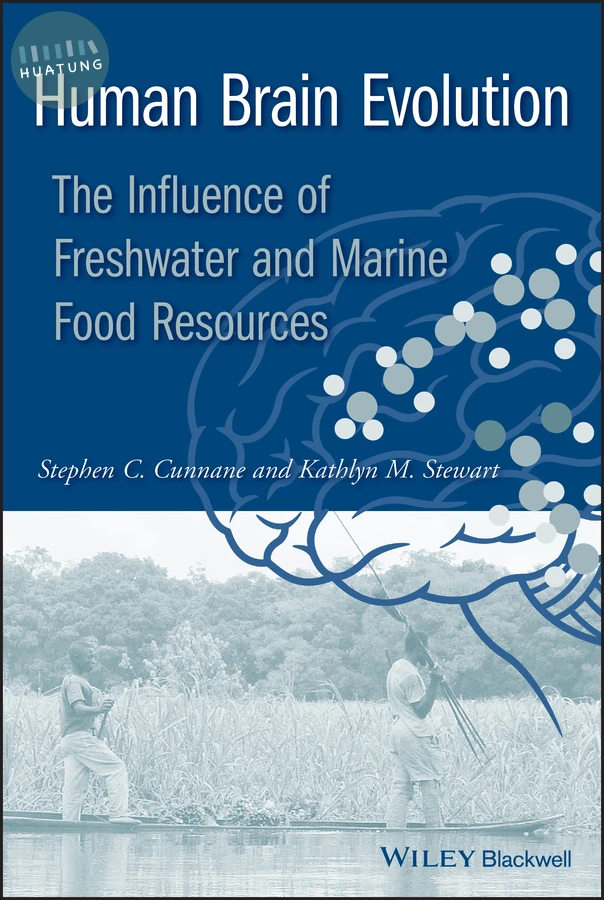

Human Brain Evolution
$5471元 定價: $6079 9折 可訂購
簡介
The evolution of the human brain and cognitive ability is one of the central themes of physical/biological anthropology. This book discusses the emergence of human cognition at a conceptual level, describing it as a process of long adaptive stasis interrupted by short periods of cognitive advance. These advances were not linear and directed, but were acquired indirectly as part of changing human behaviors, in other words through the process of exaptation (acquisition of a function for which it was not originally selected). Based on studies of the modem human brain, certain prerequisites were needed for the development of the early brain and associated cognitive advances. This book documents the energy and nutrient constraints of the modern brain, highlighting the significant role of long-chain polyunsaturated fatty acids (LC-PUFA) in brain development and maintenance. Crawford provides further emphasis for the role of essential fatty acids, in particular DHA, in brain development, by discussing the evolution of the eye and neural systems. This is an ideal book for Graduate students, post docs, research scientists in Physical/Biological Anthropology, Human Biology, Archaeology, Nutrition, Cognitive Science, Neurosciences. It is also an excellent selection for a grad student discussion seminar.
目錄
Foreword: Evolution, Encephalization, Environment vii
Phillip V. Tobias
Introduction xiii
Kathlyn M. Stewart and Stephen C. Cunnane
Contributors xix
Chapter 1 Macroevolutionary Patterns, Exaptation, and Emergence in the Evolution of the Human Brain and Cognition 1
Ian Tattersall
Introduction 1
Natural Selection 1
Macroevolution 2
Patterns in Human Evolution 3
Symbolic Cognition 5
Exaptation and Emergence 8
Large Brains and Aquatic Resources 9
References 10
Chapter 2 Long-Chain Polyunsaturated Fatty Acids in Human Brain Evolution 13
Michael A. Crawford
Introduction – Lipids and Evolution 13
The Evolution of Complex Life Forms 14
The Language of Lipids 15
DHA 17
Evolution of Homo sapiens 20
DHA and Neural Pathways? 22
A Comment on AA 24
The Third Phase of Earth’s Life History – AA and Reproduction in Mammals 25
Darwin and the Conditions of Existence 26
Implications 27
Conclusion 28
Acknowledgments 28
Notes 28
References 28
Chapter 3 Human Brain Evolution: A Question of Solving Key Nutritional and Metabolic Constraints On Mammalian Brain Development 33
Stephen C. Cunnane
Introduction 33
Brain Evolution in Hominins 35
Need for a New Paradigm 38
Brain Development 40
Energy Requirements of the Brain 41
Nutrients and Brain Function 44
Brain-Selective Nutrients 46
Critical Importance of Baby Fat in Humans 52
Gene – Nutrient Interactions 57
Conclusions 59
Acknowledgments 61
References 61
Chapter 4 Metabolic and Molecular Aspects of the Critical Role of Docosahexaenoic Acid in Human Brain Function 65
J. Thomas Brenna
Docosahexaenoic Acid (DHA) Molecular Structure 65
DHA and Neural Function 66
Metabolic and Biophysical Considerations 68
Functional Importance of DHA in Retinal and Neural Membranes 70
Dietary Need for Preformed DHA 71
DHA Intake During Pregnancy and Lactation: Effects on Higher CNS Functions of the Mother and Infant 73
Summary 74
References 74
Chapter 5 Lessons From Shorebased Hunter-Gatherer Diets Iin East Africa 77
Frits A.J. Muskiet and Remko S. Kuipers
Introduction 77
Our Genetic Background 78
Adaptation to the Conditions of Existence 79
Western Diets and the Human Genome 81
Brain-Selective Nutrients in Health and Disease 83
Dietary Fatty Acids at the Land–Water Interface 84
Tanzanian Breast Milk Fatty Acids Versus Western Recommendations 89
Estimated Fatty Acid Intakes from Shore-Based Paleolithic Diets 93
Conclusions 96
Notes 97
References 97
Appendix 103
Chapter 6 Thyroid Hormone, Iodine and Human Brain Evolution 105
Sebastiano Venturi and Michel E. Bégin
Introduction 105
Thyroid Hormone Metabolism and Function 105
Fetal Development 108
Antioxidant Activity of Iodine 108
Dietary Sources of Iodine 110
Iodine Defi ciency Disorders 111
Human Brain Evolution 113
Thyroid Hormone, Iodine, and Human Brain Evolution 117
Conclusion 118
References 119
Chapter 7 Food For Thought: The Role of Coastlines and Aquatic Resources in Human Evolution 125
Jon M. Erlandson
Introduction 125
Food for Thought 126
Human Nutrition and Physiology 127
Archaeological Evidence for the Antiquity of Fishing 128
Conclusions 132
Acknowledgments 133
Notes 133
References 133
Chapter 8 The Case for Exploitation of Wetlands Environments and Foods By Pre-Sapiens Hominins 137
Kathlyn M. Stewart
Introduction 137
Hominid Exploitation of Wetlands Environments and Resources 139
Early Hominins: Colonization of New Environments 144
Plio-Pleistocene Climate Instability and Use of Wetlands Resources 147
Intensification of Wetlands Vegetation Exploitation 149
The Shift to High-Quality Foods 151
Preconditions for Encephalization 155
Precessional Forcing, Drying Lakes/Rivers, and Die-Offs of Aquatic Faunas 157
Mammal Meat: A Later Hominin Adaptation? 158
Postscript: H. heidelbergensis and H. sapiens 160
Summary 161
Acknowledgments 162
References 162
Chapter 9 Brain Size in Carnivoran Mammals That Forage at the Land–Water Ecotone, with Implications for Robust Australopithecine Paleobiology 173
Alan B. Shabel
Introduction 173
Methods 177
Results 177
Discussion 183
Acknowledgments 186
References 186
Chapter 10 Coastal Diet, Encephalization, and Innovative Behaviors in the Late Middle Stone Age of Southern Africa 189
John Parkington
Introduction 189
Changes 190
Climate Change 196
A New Narrative 198
References 200
Chapter 11 Human Brain Evolution: A New Wetlands Scenario 203
Stephen C. Cunnane and Kathlyn M. Stewart
Human Brain Evolution 203
Neurochemical and Nutritional Evidence 203
The Fossil Evidence 204
Plausibility, Prediction, and Parsimony 205
Salient Points 206
Conclusion 207
Reference 207
Index 209