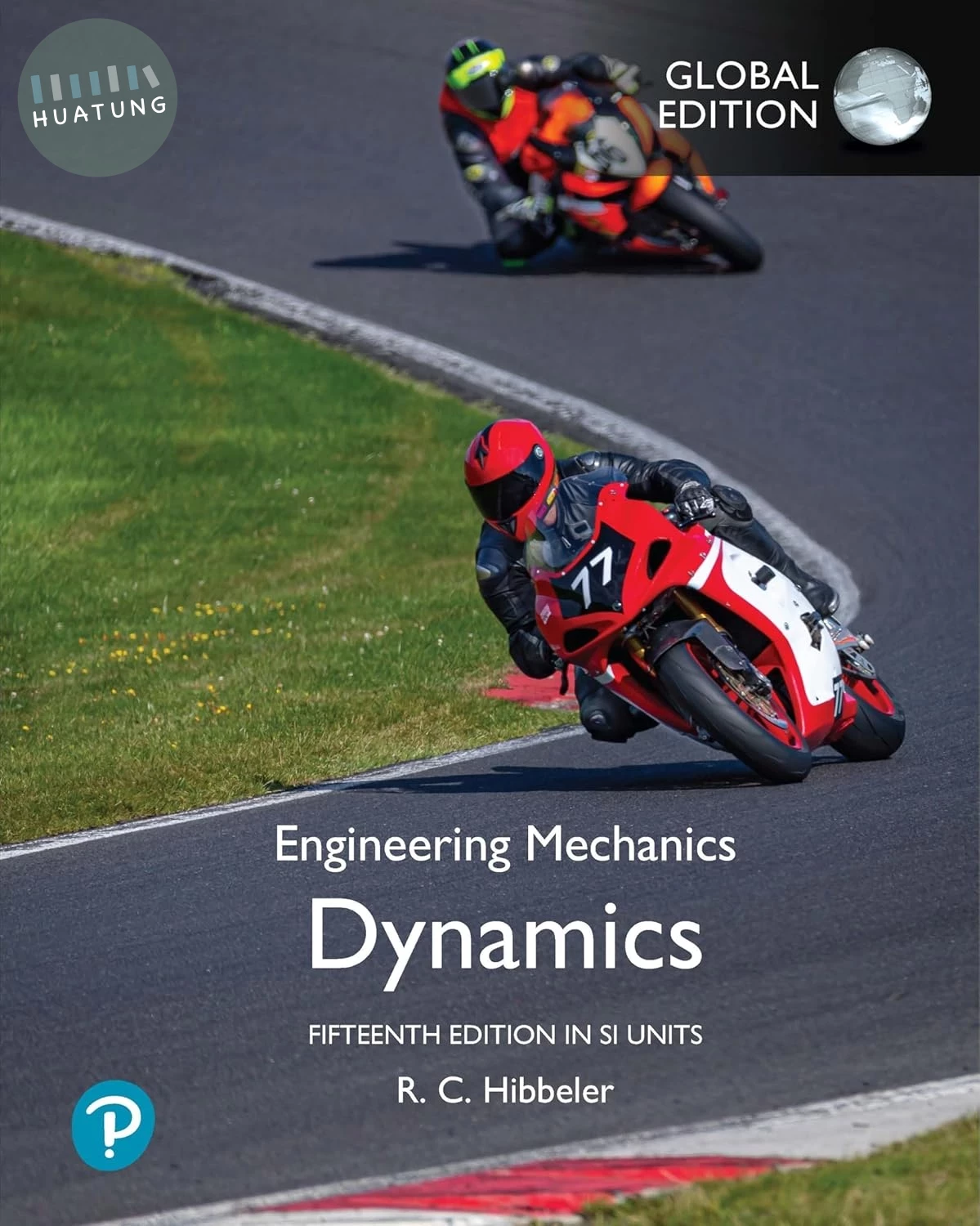
此書籍沒有詳細資訊。
還沒有人留下心得,快來搶頭香!
為您推薦
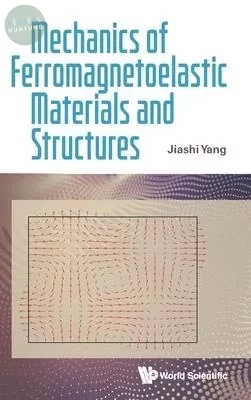
類似書籍推薦給您
【簡介】 This book presents macroscopic theories of magnetoelastic interactions in solids, mainly for saturated ferromagnetoelastic materials. In these materials, the distributed magnetic moments are aligned and have a fixed magnitude. A disturbance of the magnetic moments propagates as what is called spin waves. In elastic ferromagnets, acoustic waves may interact with spin waves, which is referred to as phonon-magnon interaction. Continuum modeling of magnetoelastic interactions in saturated ferromagnets has a few unique and interesting features. In addition to the magnetic body force and couple on the magnetic moments, the short-range interaction among neighboring magnetic moments may be described by distributed surface couples. This leads to a magnetization gradient theory. The angular momenta associated with the magnetic moments need to be considered for spin waves. In addition, the saturation condition on the magnetization vector functions as a constraint mathematically, which has important implications in the constitutive relations of these materials. The book discusses the relatively simple situation of rigid ferromagnets first and then proceeds to elastic ferromagnets. Thermal and dissipative effects as well as interactions with electromagnetic waves are also considered. Structural problems of elastic plates and beams with magnetoelastic interactions are treated as well.
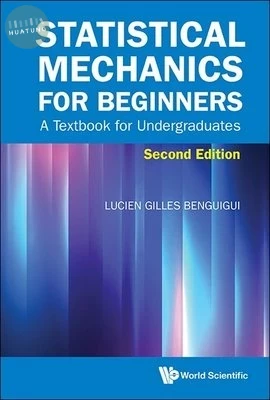
類似書籍推薦給您
【簡介】 This second edition of the popular textbook is intended for all undergraduate students in physics, with some background in thermodynamics. The basic intention of the author is maintained: to present a book for those studying statistical mechanics for the first time. The unique presentation starts off with the principles, elucidating the well-developed theory, and only thereafter the application of theory. Calculations on the main steps are detailed, leaving behind minimal gaps. The author emphasizes with theory the link between the macroscopic world (thermodynamics) and the microscopic world.The book begins with a study of three situations -- the closed system and the systems in thermal contact with a reservoir -- in order to formulate the important fundamentals: entropy from Boltzmann formula, partition function and grand partition function. Through the presentation of quantum statistics, Bose statistics and Fermi-Dirac statistics are established, including as a special case the classical situation of Maxwell-Boltzmann statistics. A series of examples follow: the harmonic oscillator, the polymer chain, the two-level system, bosons (photons, phonons, and the Bose-Einstein condensation) and fermions (electrons in metals and in semiconductors). The treatment of bosons and fermions is expanded with a detailed comparison of their thermal behaviors. A study on neutron stars, a pure fermion system, is now included. The concepts of distribution and fluctuations are also briefly discussed, and an important neglected problem is explained: the equivalence between the sum of a series and the value of the associated integral, teaching further insights on Bose-Einstein condensation. A compact historical note on influential scientists forms the concluding chapter.This book will serve as a vital resource for undergraduates taking their first foray into statistical mechanics, setting a strong foundation for more advanced topics in their studies.
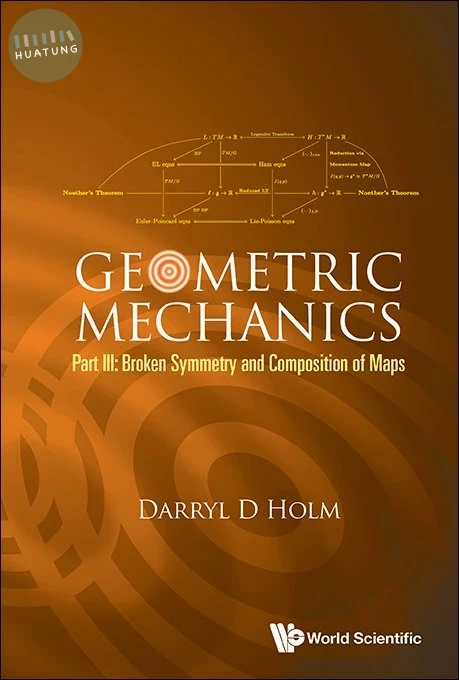
類似書籍推薦給您
【簡介】 Geometric Mechanics: Part III is a textbook presented in a lecture notes format, providing precise definitions and practical examples across a series of 31 lectures that have been developed from the author’s extensive experience of teaching and research. Geometric mechanics is an incredibly rich field of study: beyond its mathematical depth and beauty, it provides a robust framework for exploring the geometric structures underpinning many dynamical systems crucial to physics.The first part introduces undergraduate mathematics and physics students to the applications of geometric mechanics in finite dimensional dynamical systems of ordinary differential equations. The second part covers the essential theory of manifolds and Lie groups to prepare senior undergraduates and graduate students for the modern applications of geometric mechanics. These applications are introduced in the third part, which delves into the geometric mechanics of partial differential equations that govern the dynamics of ideal continuum mechanics, including fluids and plasmas, at the cutting edge of current research.This textbook is designed to facilitate both course learning and individual study. With focused notes, numerous examples, and nearly 200 exercises, it serves as a valuable resource for postgraduate students, course instructors, and researchers.

類似書籍推薦給您
【簡介】 Take anything in the universe, put it in a box, and heat it up. Regardless of what you start with, the motion of the substance will be described by the equations of fluid mechanics. This remarkable universality is the reason why fluid mechanics is important. The key equation of fluid mechanics is the Navier-Stokes equation. This textbook starts with the basics of fluid flows, building to the Navier-Stokes equation while explaining the physics behind the various terms and exploring the astonishingly rich landscape of solutions. The book then progresses to more advanced topics, including waves, fluid instabilities, and turbulence, before concluding by turning inwards and describing the atomic constituents of fluids. It introduces ideas of kinetic theory, including the Boltzmann equation, to explain why the collective motion of 1023 atoms is, under the right circumstances, always governed by the laws of fluid mechanics.
 資訊
資訊
 工程
工程
 數學與統計學
 機率與統計
機率與統計
 自然科學
自然科學
 健康科學
健康科學
 地球與環境
地球與環境
 建築、設計與藝術
 人文與社會科學
 教育
教育
 語言學習與考試
 法律
法律
 會計與財務
會計與財務
 大眾傳播
大眾傳播
 觀光與休閒餐旅
 考試用書
考試用書
 研究方法
研究方法
 商業與管理
商業與管理
 經濟學
經濟學
 心理學
心理學
 生活
生活
 生活風格商品
 參考書/測驗卷/輔材