此書籍沒有詳細資訊。
還沒有人留下心得,快來搶頭香!
為您推薦

類似書籍推薦給您
【簡介】 The only treatment of ethics from a scientific and engineering perspective The pursuit of science and engineering requires freedom of thought and, in the academic sense, unrestricted communication. It is through the professionalism of the members of these disciplines that world knowledge and technology advances. Yet there are continuous reports of unethical behavior in the forms of data manipulation, cheating, and plagiarism at the highest levels. The motivations for this behavior are varied, such as the need to advance one's career or to obtain research funding. This book gives an account of scientific and engineering disciplines and examines the potential for unethical behavior by professionals. Documented examples are presented to show where the matter could have been halted before it became an unethical issue. The authors also look to the future to see what is in store for professionals in science and engineering and how the potential for unethical behavior can be negated. 【目錄】
類似書籍推薦給您
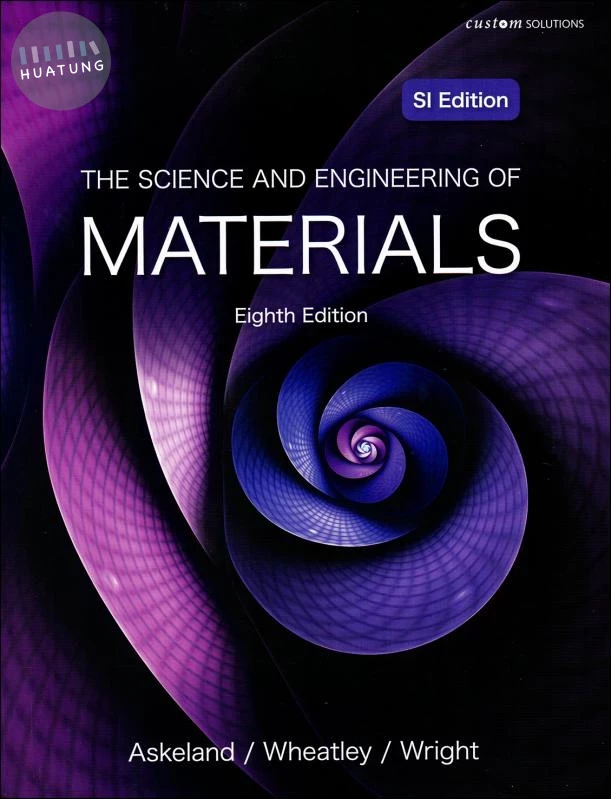
【簡介】 【目錄】 1. Introduction to Materials Science and Engineering. 2. Atomic Structure. 3. Atomic and Ionic Arrangements. 4. Imperfections in the Atomic and Ionic Arrangements. 5. Atom and Ion Movements in Materials 6. Mechanical Properties: Part One. 7. Mechanical Properties: Part Two. 8. Strain Hardening and Annealing. 9. Principles of Solidification. 10. Solid Solutions and Phase Equilibrium. 11. Dispersion Strengthening and Eutectic Phase Diagrams. 12. Dispersion Strengthening by Phase Transformations and Heat Treatment. 13. Heat Treatment of Steels and Cast Irons. 14. Nonferrous Alloys. 15. Ceramics. 16. Polymers. 17. Composites: Teamwork and Synergy in Materials. 18. Biological, Biocompatible, and Bioinspired Materials. 19. Electronic Materials. 20. Magnetic Materials. 21. Photonic Materials. 22. Thermal Properties of Materials. 23. Corrosion and Wear. Appendix A: Selected Physical Properties of Metals. Appendix B: The Atomic and Ionic Radii of Selected Elements.
類似書籍推薦給您
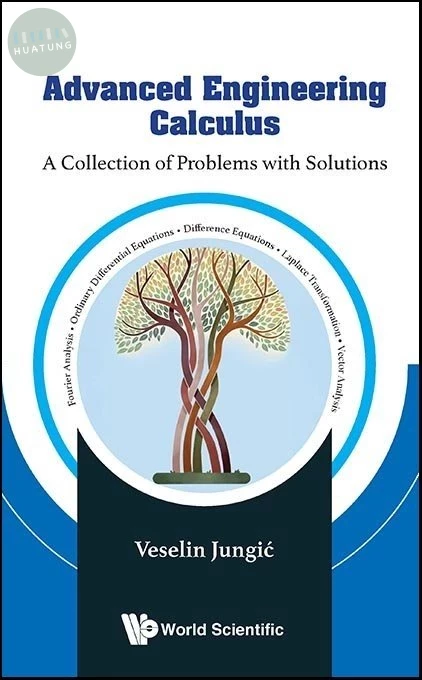
Advanced Engineering Calculus is a content-rich, user-friendly and compact learning and teaching resource. It offers over 440 problems — many with multiple parts — as well as detailed figures to aid readers in visualizing and understanding the topics covered. Engaging with a wide range of advanced calculus topics and their applications, this book caters to students enrolled in the sciences and applied sciences. Each chapter begins with an accessible summary of the relevant mathematical notions and their properties. Questions are sorted by topic and accompanied by detailed solutions. To further aid readers, precise and consistent mathematical notation and vocabulary are used throughout. This produces a learning resource capable of clearly communicating complex and advanced calculus ideas and their applications. In short, this book serves as a cross between a handbook, a learning guide, and rich teaching resource on a wide range of advanced calculus topics, something that has been missing in the otherwise crowded field of calculus titles. Request Inspection Copy Sample Chapter(s) Preface Chapter 3: Difference Equations Contents: Preface Preliminaries Fourier Analysis Ordinary Differential Equations Difference Equations Laplace Transformation Vector Analysis References Index
類似書籍推薦給您
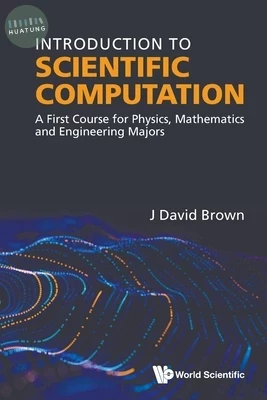
【簡介】 This book introduces scientific computation in an accessible and interactive way for undergraduates, especially those in the sciences, engineering, and mathematics. No prior programming experience is expected. Readers can begin directly from the introductory chapters, which cover basic elements of the Python programming language, then progress to the main chapters where techniques of scientific computation are presented and applied to specific problems. Examples and exercises are included in detail, covering diverse topics from various branches of science. These include cellular automata, the driven damped pendulum, Euler-Bernoulli beam theory, Newton’s law of cooling, and many others.Rather than using established routines as a black box to memorize, this book delves into foundational concepts and encourages readers to apply fundamental principles to hands-on problems. Extensive use of scientific Python libraries and Jupyter Notebooks reinforce the student’s understanding. This book is well-suited for a first exposure to scientific computation, but also to bridge introductory programming classes with advanced coursework in scientific modeling.
類似書籍推薦給您
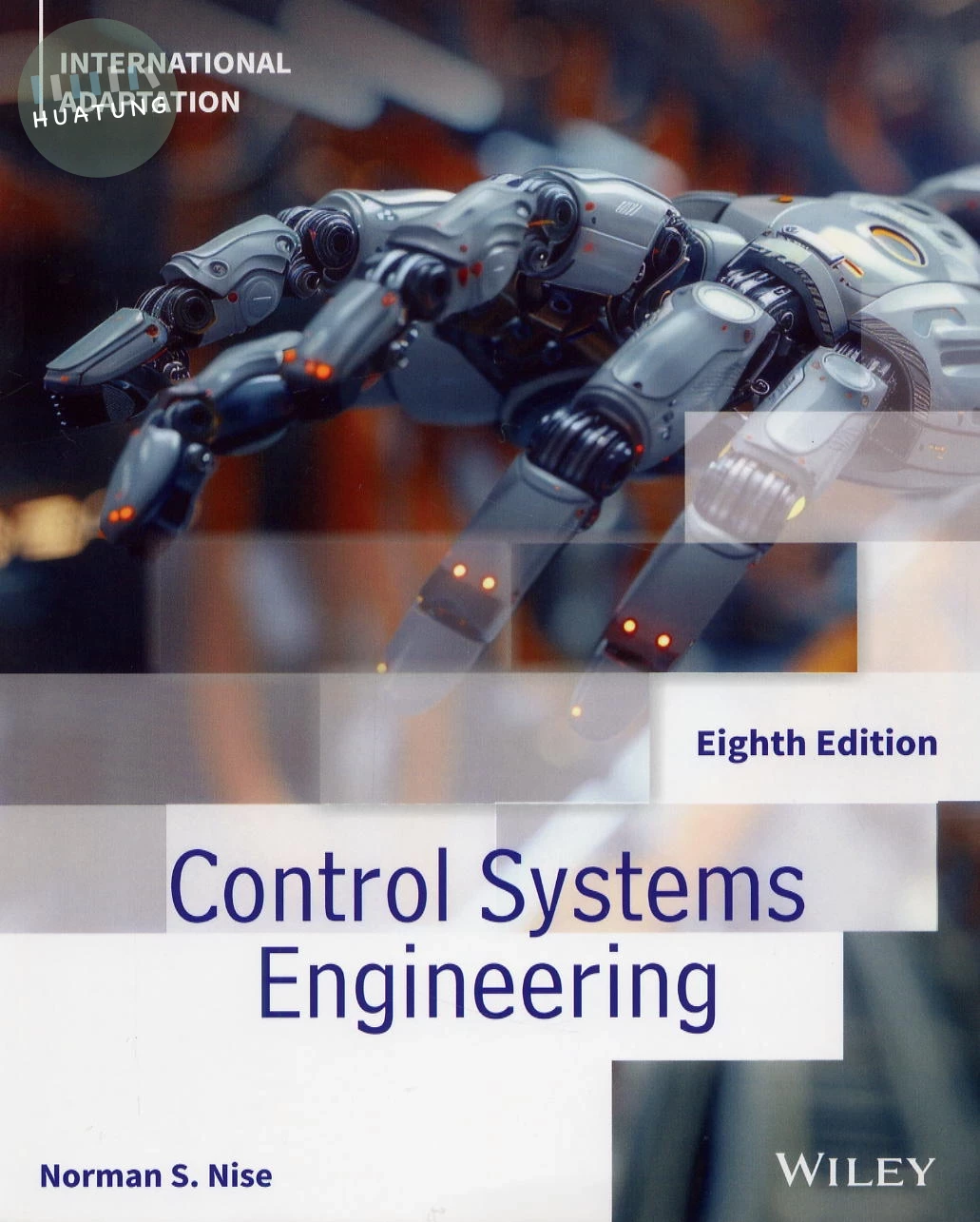
【簡介】 ●Emphasizes design and visualizations to strengthen comprehension of physical systems and design specifications. ●Presents step-by-step procedures and concise methodologies that tie mathematics directly to physical realities. ●Demonstrates the design and analysis process through real world case studies. ●Highlights the importance of computer aided analysis and design, integrating the use of MATLAB, Simulink, and LabVIEW throughout the text. ●Allows reader to simulate and verify critical concepts using Cyber Exploration Laboratory. 【目錄】 1. INTRODUCTION 2. MODELING IN THE FREQUENCY DOMAIN 3. MODELING IN THE TIME DOMAIN 4. TIME RESPONSE ANALYSIS 5. REDUCTION OF MULTIPLE SUBSYSTEMS 6. STABILITY 7. STEADY-STATE ERRORS 8. ROOT LOCUS TECHNIQUES 9. DESIGN VIA ROOT LOCUS 10. FREQUENCY RESPONSE TECHNIQUES 11. DESIGN VIA FREQUENCY RESPONSE 12. DESIGN VIA STATE SPACE 13. DIGITAL CONTROL SYSTEMS 14. OPTIMAL CONTROL SYSTEMS (Available Online) APPENDIX A1 List of Symbols APPENDIX A2 Antenna Azimuth Position Control System APPENDIX A3 Unmanned Free-Swimming Submersible Vehicle APPENDIX A4 Key Equations ANSWERS TO SELECTED PROBLEMS ONLINE APPENDICES APPENDIX B MATLAB Tutorial APPENDIX C Simulink Tutorial APPENDIX D LabVIEW Tutorial APPENDIX E MATLAB’s GUI Tools Tutorial APPENDIX F MATLAB’s Symbolic Math Toolbox Tutorial APPENDIX G Matrices, Determinants, and Systems of Equations APPENDIX H Control System Computational Aids APPENDIX I Derivation of a Schematic for a DC Motor APPENDIX J Derivation of the Time Domain Solution of State Equations APPENDIX K Solution of State Equations for t0 ≠ 0 APPENDIX L Derivation of Similarity Transformations APPENDIX M Root Locus Rules: Derivations
 資訊
資訊
 工程
工程
 數學與統計學
 機率與統計
機率與統計
 自然科學
自然科學
 健康科學
健康科學
 地球與環境
地球與環境
 建築、設計與藝術
 人文與社會科學
 教育
教育
 語言學習與考試
 法律
法律
 會計與財務
會計與財務
 大眾傳播
大眾傳播
 觀光與休閒餐旅
 考試用書
考試用書
 研究方法
研究方法
 商業與管理
商業與管理
 經濟學
經濟學
 心理學
心理學
 生活
生活
 生活風格商品
 參考書/測驗卷/輔材