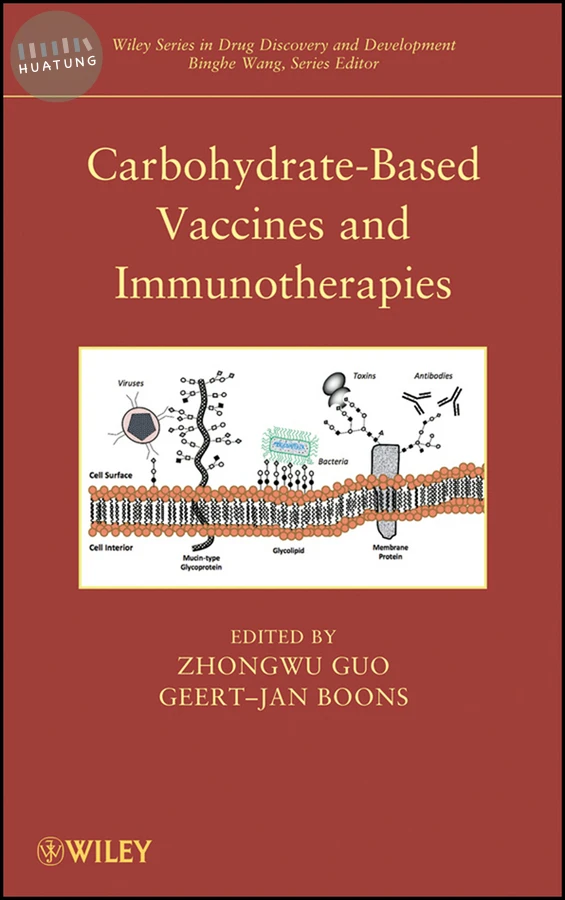

Carbohydrate-Based Vaccines and Immunotherapies
$5387元 定價: $5985 9折 可訂購
簡介
The fundamental science and the latest developments in carbohydrate-based vaccines
The relatively new field of glycoimmunology has emerged from the marriage of glycobiology and immunology, in recognition of the important role carbohydrates play as antigenic determinants. Carbohydrate-Based Vaccines and Immunotherapies comprehensively reviews the state of this exciting field, offering a single source for both the fundamental science and the latest developments.
With contributions by leading experts, this resource covers the design, synthesis, evaluation, and applications of various carbohydrate-based vaccines, including polysaccharides, neoglycoproteins, and neoglycolipids. The text approaches vaccine design from a chemical and molecular focus, staying in line with current advances.
Key topics covered by Carbohydrate-Based Vaccines and Immunotherapies include:
Recent developments towards clinically useful vaccines against bacteria, viruses, parasites, and fungi
Using adjuvants to improve immunogenicity and/or immunological properties of vaccines
Choosing and designing proper adjuvants for specific targets
Abnormal carbohydrates expressed by tumors
Carbohydrate-based therapeutic cancer vaccines or cancer immunotherapy
Clinical trials results for synthetic cancer vaccines
Glycoengineering of cell surface carborhydrates and its anticancer applications
Using cell surface carbohydrates for disease diagnosis
A single, convenient source of state-of-the-art information from leading authorities in the field, Carbohydrate-Based Vaccines and Immunotherapies is an essential reference for organic chemists and biochemists, academic researchers, and other students and professionals involved in vaccine design.
目錄
Preface xv
Contributors xvii
1 Glycobiology and Immunology 1
Udayanath Aich and Kevin J. Yarema
1.1 Introduction 1
1.2 Glycobiology 3
1.2.1 Glycosylation—Is It Worth the Cost? 3
1.2.2 Glycan Biosynthesis—A Dauntingly Complex Process 6
1.2.3 Glycoproteins 7
1.2.4 Lipid-Based Glycans 16
1.2.5 Polysaccharides: Glycosaminoglycans and Bacterial Capsular Components 18
1.3 The Immune System 20
1.3.1 Introductory Comments 20
1.3.2 Overview of the Immune System 20
1.3.3 Glycoimmunobiology 23
1.3.4 Interplay between Glycosylation and Sugars: a Two-Way Street 27
1.4 Carbohydrate Antigens 28
1.4.1 Carbohydrate Antigens in Humans 28
1.4.2 Carbohydrates and Pathogens 30
1.4.3 Carbohydrate-Based Vaccines 34
1.4.4 Concluding Comments: Building on Success 38
Acknowledgment 38
References 38
2 Preparation of Glycoconjugate Vaccines 55
Wei Zou and Harold J. Jennings
2.1 Introduction 55
2.2 Capsular Polysaccharide–Protein Conjugates 56
2.2.1 Haemophilus influenzae Type b 56
2.2.2 Streptococcus pneumoniae 59
2.2.3 Neisseria meningitidis 60
2.2.4 Salmonella typhi Vi 64
2.2.5 Group B Streptococcus 65
2.2.6 Staphylococcus aureus Types 5 and 8 67
2.3 Lipopolysaccharide (LPS) and Lipooligosaccharide (LOS) Conjugates 69
2.3.1 Escherichia coli O157 69
2.3.2 Vibrio cholerae O1 and O139 70
2.3.3 Shigella dysenteriae Type 1, sonnei and flexneri 2a 71
2.3.4 Neisseria meningitidis and Nontypeable Haemophilus influenzae 72
2.4 Total Synthetic Glycoconjugate Vaccines 76
References 79
3 Adjuvants for Protein- and Carbohydrate-Based Vaccines 89
Bruno Guy
3.1 Introduction 89
3.2 Initiation and Stimulation of Adaptive Responses 90
3.3 “Old” Adjuvants and Formulations 92
3.3.1 Aluminum 92
3.3.2 Emulsions 93
3.3.3 Saponins, QS21, and ISCOMS 94
3.3.4 Liposomes and Microparticles 94
3.3.5 Antigen/Formulation Targeting 94
3.3.6 Induction of CD8 CTLs with Soluble Antigens 95
3.4 Renaissance of Innate Immunity 95
3.4.1 Toll-Like Receptors: Agonists and Roles 95
3.4.2 Non-TLRs Innate Receptors 97
3.4.3 Other Receptors Involved in Antigen Capture and Recognition 97
3.5 From Basic Research to Practical Applications: Identification of New Adjuvants 97
3.5.1 TLR Synthetic Agonists 97
3.5.2 Combination of PRR Agonists 98
3.6 Adjuvants for Carbohydrate-Based Vaccines 98
3.6.1 Td and Ti B-Cell Responses 99
3.6.2 Adjuvants for “Free” Polysaccharides (Ti Antigens) 99
3.6.3 Adjuvants for Glycoconjugate Vaccines (T-Dependent Antigens) 100
3.7 Combinations of Adjuvants: Preclinical and Clinical Developments 101
3.8 Immunomodulation of Existing Responses: Adjuvants for Therapeutic Vaccines 101
3.9 Take Another Route 102
3.9.1 Adjuvants for Mucosal Immunization 102
3.9.2 Epidermal or Intradermal Routes 102
3.10 Practical Aspects of Adjuvant Development 103
3.10.1 Regulatory Aspects 103
3.10.2 Safety versus Efficacy: Risk–Benefit Ratio 103
3.11 Preclinical Models Used in Adjuvant Development 104
3.11.1 Animal Models 104
3.11.2 In vitro Models 104
3.12 Conclusions and Perspectives 106
Acknowledgment 106
References 106
4 Carbohydrate-Based Antibacterial Vaccines 117
Robert A. Pon and Harold J. Jennings
4.1 Introduction 117
4.2 Polysaccharide and Glycoconjugate Immunobiology 118
4.3 Deficiencies in the Human Immune Response to Polysaccharides 120
4.4 Glycoconjugate Vaccines 121
4.5 Haemophilus influenzae 122
4.5.1 Hib Polysaccharides 122
4.5.2 Hib Conjugate Vaccines 123
4.6 Neisseria meningitidis 125
4.6.1 Meningococcal Polysaccharide Vaccines 126
4.6.2 Meningococcal Conjugate Vaccines 126
4.7 Streptococcus pneumoniae 133
4.7.1 Impact on Invasive Pneumococcal Disease 139
4.7.2 Impact on Acute Otitis Media 140
4.8 Group B Streptococcus 140
4.9 Salmonella typhi 145
4.10 Conjugate Vaccines: Future Concerns 146
4.11 Summary 147
References 148
5 Carbohydrate-Based Antiviral Vaccines 167
Benjamin M. Swarts and Zhongwu Guo
5.1 Introduction 167
5.2 Viral Glycosylation 168
5.2.1 Viral N-glycosylation 168
5.2.2 Carbohydrates of HIV 170
5.2.3 Carbohydrates of Influenza A Virus 172
5.2.4 Carbohydrates in Hepatitis C Virus 173
5.2.5 Carbohydrates in Other Viruses 174
5.3 Vaccine and Drug Development 174
5.3.1 Human Immune Deficiency Virus 174
5.3.2 Influenza A Virus 181
5.3.3 Hepatitis C Virus 182
5.4 Conclusions 182
Acknowledgment 183
References 183
6 Carbohydrate-Based Antiparasitic Vaccines 195
Faustin Kamena, Xinyu Liu, and Peter H. Seeberger
6.1 Introduction 195
6.2 GPI-Based Antimalarial Vaccine 197
6.2.1 GPI as a Malaria Toxin 197
6.2.2 Synthetic GPI as Antitoxic Malaria Vaccine Candidate 198
6.2.3 Synthetic GPI Microarray to Define Antimalarial Antibody Response 200
6.3 LPG-Based Antileishmanial Vaccine 201
6.3.1 LPG in Leishmaniasis Pathogenesis 201
6.3.2 Synthetic Phosphoglycan Repeating Unit as Potential Antileishmanial Vaccine 203
6.3.3 Synthetic LPG Cap Oligosaccharide as Antileishmanial Vaccine Candidate 204
6.4 Other Examples 205
6.4.1 Fucosylated N-glycan as Potential Vaccine Lead against Schistosomiasis 205
6.4.2 GPIs as Potential Vaccine Lead against Toxoplasmosis and Chagas’ Disease 207
6.5 Perspectives and Future Challenge 208
Acknowledgment 209
References 209
7 Carbohydrate-Based Antifungal Vaccines 215
Magdia De Jesus, Liise-anne Pirofski, and Arturo Casadevall
7.1 Introduction 215
7.2 Terminology 216
7.2.1 Vaccination versus Immunization 216
7.2.2 Toxoids 216
7.2.3 Glycoconjugates 216
7.3 Antifungal Glycoconjugate Vaccines 217
7.3.1 C. neoformans Polysaccharide–Protein Conjugates 217
7.3.2 Development of Alternative Vaccines for C. neoformans 220
7.3.3 C. albicans Mannan–Protein Conjugates 220
7.3.4 β-Glucan–Protein Conjugates 221
7.4 Antifungal Vaccines and the Immune System 222
7.5 Summary 223
Acknowledgment 224
References 224
8 Cancer-Associated and Related Glycosphingolipid Antigens 227
Steven B. Levery
8.1 Introduction 227
8.2 Structural Classification of Antigens 228
8.3 “Abnormal” Expression of Glycosphingolipid (GSL) Glycan Structures in Cancer Tissues 228
8.4 Discussion of Selected Antigens 234
8.4.1 Globo-Series and Related Antigens 234
8.4.2 Ganglio-Series Antigens 237
8.4.3 Lacto-Series (Type 1 Chain; Lcn) Antigens 241
8.4.4 Neolacto-Series (Type 2 Chain; nLcx) Antigens 242
8.5 Other Antigens 248
8.5.1 Lea-Lea and Leb-Lea 248
8.5.2 Lea-Lex 249
Acknowledgment 250
References 250
9 Semisynthetic and Fully Synthetic Carbohydrate-Based Cancer Vaccines 263
Therese Buskas, Pamela Thompson, and Geert-Jan Boons
9.1 Introduction to Cancer Vaccines 263
9.2 Tumor-Associated Carbohydrate Antigens (TACAs) 264
9.3 Carbohydrate-Based Cancer Vaccines 267
9.4 Humoral Immune Response to Carbohydrates 267
9.5 MHC-Mediated Immune Response to Glycopeptides 269
9.6 Toll-Like Receptors and the Link Between Innate and Adaptive Immunity 270
9.7 Chemical Synthesis of Tumor-Associated Carbohydrates and Glycopeptides 271
9.8 Semisynthetic Carbohydrate-Based Cancer Vaccines 276
9.9 Fully Synthetic Carbohydrate-Based Cancer Vaccines 279
9.10 B-Epitope and Receptor Ligand Di-Epitope Constructs 279
9.11 B- and T-Cell Di-Epitope Constructs 284
9.12 Tricomponent Vaccines 288
References 292
10 Glycoengineering of Cell Surface Sialic Acid and Its Application to Cancer Immunotherapy 313
Zhongwu Guo
10.1 Introduction 313
10.2 Engineering of Cell Surface Sialic Acids 314
10.3 Sialic Acid Engineering for Modulation of Cell Surface Reactivity 318
10.4 Sialic Acid Engineering for Cancer Immunotherapy 321
10.5 Summary 325
Acknowledgment 326
References 326
11 Therapeutic Cancer Vaccines: Clinical Trials and Applications 333
Hans H. Wandall and Mads A. Tarp
11.1 Introduction 333
11.2 Innate and Adaptive Immunity in Relation to Cancer Immunotherapy 334
11.3 Design Issues for Clinical Cancer Vaccine Trials 337
11.4 Clinical Development of Cancer Vaccines 337
11.5 Proof of Principle Trials 338
11.5.1 Toxicity and Pharmacokinetics 339
11.5.2 Dose and Administration Schedule 339
11.5.3 Endpoints: Biological Activity and Clinical Activity 339
11.6 Efficacy Trials 340
11.7 Clinical Endpoints in Efficacy Trials 340
11.8 Challenges in Vaccine Development 341
11.9 Defining the Target Tumor-Associated Antigens 342
11.10 Production and Storage Issues 344
11.11 Clinical Trials 345
11.11.1 Glycosphingolipid-Based Vaccines 347
11.11.2 O-glycan-Based Vaccines 351
11.12 Conclusions 354
Acknowledgment 355
References 355
12 Carbohydrates as Unique Structures for Disease Diagnosis 367
Kate Rittenhouse-Olson
12.1 Introduction 367
12.2 Viruses 369
12.2.1 Infectious Mononucleosis 369
12.2.2 Influenza A and B 370
12.3 Bacteria 371
12.3.1 Streptococcus pyogenes 371
12.3.2 Groups A, B, C, D, F, and G Streptococcus 371
12.3.3 Streptococcus pneumoniae 373
12.3.4 Meningitis 373
12.3.5 Chlamydia trachomatis 374
12.3.6 Future 374
12.4 Fungi 374
12.4.1 Aspergillus fumigatus 375
12.4.2 Invasive Candidiasis 375
12.4.3 Cryptococcus neoformans 375
12.4.4 Histoplasma capsulatum 376
12.5 Parasites 377
12.5.1 Echinococcus multilocularis 377
12.5.2 Clonorchis sinensis 378
12.5.3 Trichinella 378
12.5.4 Schistosoma mansoni 378
12.6 Autoimmunity 378
12.6.1 Diabetes 378
12.6.2 Cold Agglutinin Disease 379
12.6.3 Inflammatory Bowel Disease 380
12.7 Tumors 380
12.7.1 Bladder 381
12.7.2 Breast 381
12.7.3 Colon 382
12.7.4 Liver 382
12.7.5 Lung 383
12.7.6 Melanoma 384
12.7.7 Ovarian 385
12.7.8 Pancreatic 386
12.7.9 Prostate 387
12.8 Inherited or Acquired Disorders of Glycosylation 388
References 388
Index 395